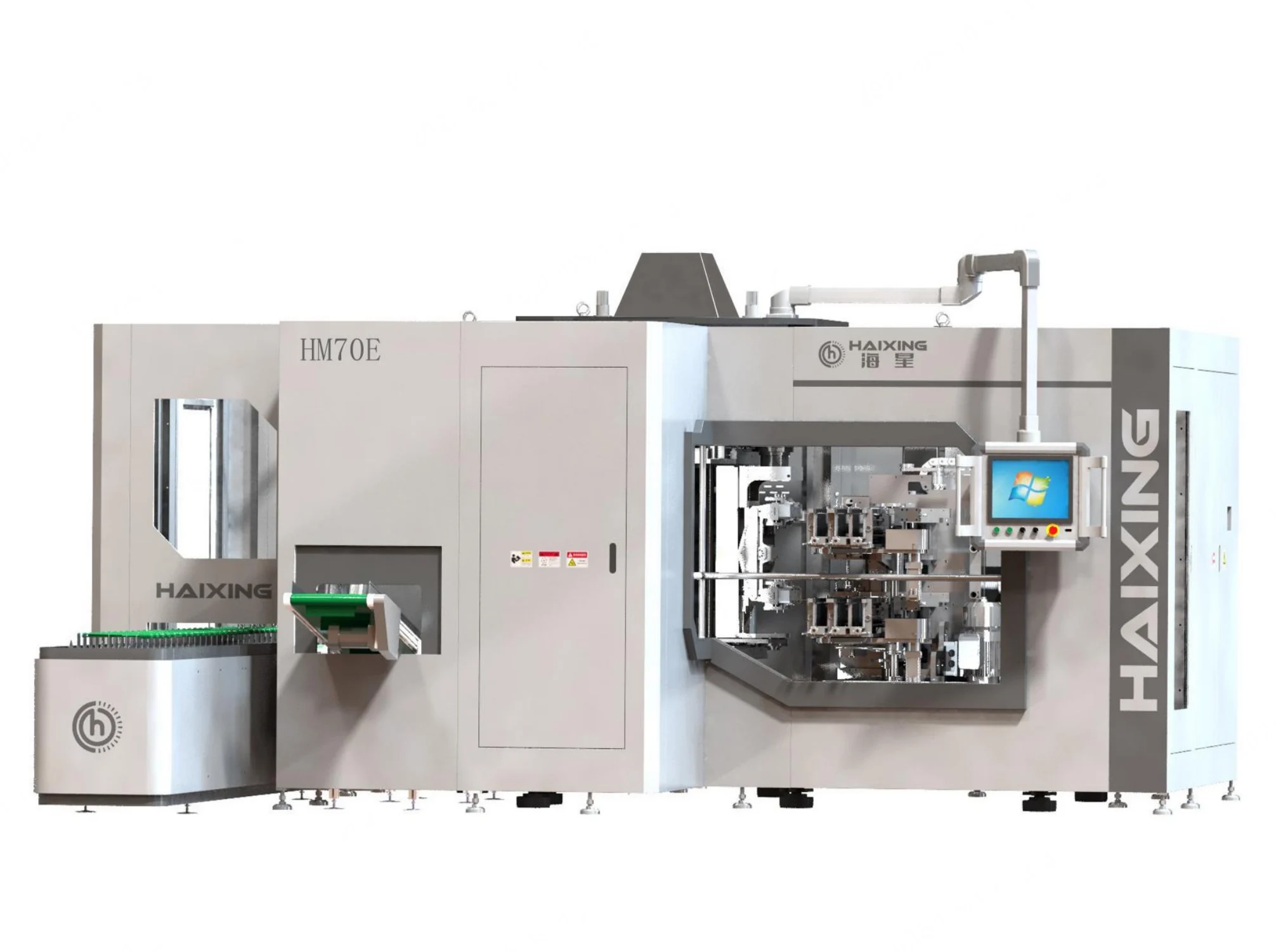
The Evolution of Brush Manufacturing from Manual Craft to Precision Automation
For decades, the commercial and industrial brush manufacturing sector relied heavily on manual labor and semi-mechanical tools where operators manually fed filaments into various wooden or plastic bases. While traditional hand-crafting techniques hold historical charm, they inherently struggle to keep up with the rigorous demands of modern global markets. Today, consumers and industrial supply chains demand absolute uniformity, exceptionally secure bristle retention, and rapid, high-volume production schedules. In today's competitive manufacturing environment, even minor inconsistencies in hole depth, filament placement, or tuft angle can result in product failure, premature shedding, and costly customer complaints. Moving away from manual methods to a fully automated production workflow is no longer just an upgrade; it is essential for long-term business survival and brand reputation. At the center of this industrial transformation is the advanced brush drilling and tufting machine, a sophisticated system designed to replace human error with unwavering digital precision.The Technological Leap: How Modern CNC Systems Eliminate Human Error
Achieving flawless product quality starts at the microscopic level of mechanical positioning, coordinate mapping, and execution consistency. Advanced machinery utilizes computer numerical control (CNC) technology alongside multi-axis linkage systems—such as intricate five-axis configurations—to synchronize drilling and tufting operations smoothly within a single cycle. Engineering insights show that replacing manual jigs with servo-driven drill feeds operating within precise millimeter ranges drastically reduces mechanical drift and operational tolerances. Precise digital coordinate mapping ensures that every single hole is bored to the exact required depth, angle, and pitch without deviation. This meticulous digital control eliminates structural weaknesses typically caused by misaligned or unevenly spaced holes, ensuring that staple insertion and anchor wire placement secure the synthetic and natural filaments firmly in place every single time.Consistency in Mass Production: Achieving Uniformity Across Complex Geometries
A major historical challenge in the brush-making industry has always been maintaining consistent product quality when scaling operations from small custom batches to high-volume mass production. This complexity multiplies when producing specialized brushes featuring complex curved, slanted, spherical, or tubular geometries. Modern automated equipment addresses this hurdle through intelligent system configurations and versatile, interchangeable platform designs supporting slanted, spherical, and tubular environments. Operating at high tufting speeds ranging dynamically across hundreds of holes per minute, these systems maintain absolute structural integrity, tension balance, and geometric uniformity across thousands of continuous operational cycles. Independent optimization of drilling and tufting heads prevents cumulative mechanical wear and tear, guaranteeing that units rolling off the automated assembly line late in a production run match the exact physical specifications, pull-force resilience, and visual perfection of the very first unit produced.Economic and Operational Value: Maximizing Return on Investment Through Reduced Waste and Smart Uptime
Beyond guaranteeing superior physical product quality and structural durability, advanced automated solutions deliver measurable economic value directly to factory floors and corporate bottom lines. In an era marked by persistent labor shortages and rising global wage pressures, relying on manual assembly scales poorly and erodes profit margins. Modern automated systems feature intuitive, user-friendly, bilingual touchscreen control interfaces capable of storing numerous unique production programs. This allows operators of varying skill levels to manage, adjust, and monitor production runs efficiently without requiring extensive technical training or lengthy onboarding periods. Standardized component architecture and modular design principles significantly reduce routine maintenance overhead and boost operational efficiency. By incorporating energy-efficient drive systems and ensuring high operational uptime without frequent full-line shutdowns, manufacturing businesses drastically cut energy consumption, minimize expensive raw material waste, and secure a substantially faster return on investment.Empowering Global Manufacturers Through Cutting-Edge Brush Solutions
Navigating the complex intricacies of modern global supply chains requires machinery partners who seamlessly combine deep technical heritage with relentless innovation and robust manufacturing capabilities. Backed by decades of focused research, development, and engineering excellence in manufacturing daily-use and industrial brush-making equipment, Haixing provides reliable solutions ranging from intricate oral care lines to heavy-duty industrial cleaning and polishing brush machines. Supported by independent patented technologies such as multi-station rotary tufting control systems and advanced multi-axis integrated architectures, Haixing delivers robust, high-performance equipment designed for diverse global applications. By combining rigorous quality control protocols, multi-scenario production adaptability, and comprehensive technical support, Haixing empowers global manufacturers to elevate their production capabilities, scale operations with confidence, and deliver exceptional quality to their respective end markets.

 EN