
 EN
EN
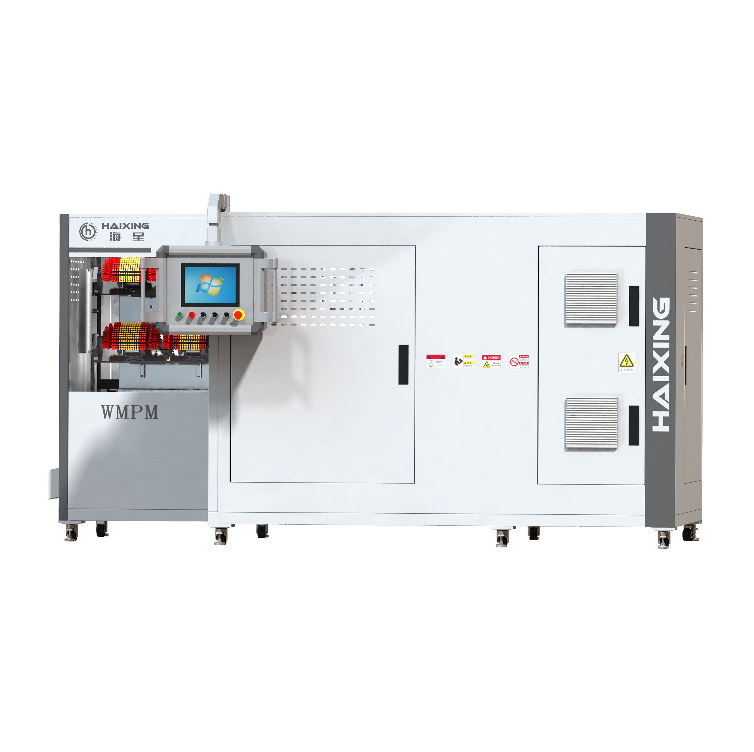
Why Bristle Placement Accuracy Is Critical for Brush Performance and Compliance
How bristles line up makes all the difference when it comes to how well brushes work across different sectors. Small mistakes in where they're placed can really hurt performance. Take toothbrushes for example - studies found that those with uneven tufts remove about 22 percent less plaque than properly aligned ones. Cleaning brushes used in factories don't perform right either if their bristles aren't spread out evenly, leading to poor coverage and faster wear on equipment. For makeup applicators, getting the filaments just right matters because otherwise products won't apply smoothly or end up clumped together. Regulations are another big concern here. Medical grade brushes need to follow FDA rules under ISO 13485 standards, while cosmetic tools must pass EU tests regarding bristle density. Companies that fail these checks face serious problems, including recalls that typically cost around $740,000 according to Ponemon Institute data from 2023. Modern manufacturing has solved many of these issues thanks to computer controlled tufting systems which cut down on human errors during production. These machines not only improve quality control but also save money by reducing wasted materials by approximately 17% over traditional hand methods, making them good for both the environment and bottom lines.
Key implications:
- Performance degradation from minimal placement errors
- Regulatory non-compliance penalties and recall expenses
- Material efficiency gains through precision manufacturing
How CNC Control Systems Enable Sub-0.02 mm Bristle Placement Repeatability
Today's brush manufacturing equipment can place bristles with amazing accuracy thanks to computers handling the positioning work. These machines use closed loop systems where servos constantly check where the tufting heads are located and make adjustments as needed. They compensate automatically when there's heat causing parts to expand or when mechanical components start to vary slightly over time. The control system manages movement along multiple axes at once, coordinating circular motion with straight line paths and rotation angles. This capability lets manufacturers create intricate bristle density patterns that are really important for things like slanted makeup brushes or specialized cleaning instruments used in healthcare settings.
Closed-loop servo kinematics and multi-axis tufting path control in modern brush making machines
Servo-driven actuators with 0.001 mm resolution encoders eliminate backlash during filament insertion, while adaptive algorithms adjust insertion force based on substrate hardness. Integrated tool changers maintain consistent tufting pressure across production runs. This synergy between motion hardware and CNC logic transforms digital design intent into physical precision.
Empirical validation: ISO 9001-certified CNC brush making machine deployments achieving <0.015 mm positional variance
Third-party audits of manufacturing facilities reveal consistent sub-0.015 mm repeatability across 50,000+ cycles—surpassing manual methods by 89% in positional consistency. Such reliability directly impacts product efficacy: oral hygiene brushes with CNC-controlled tuft placement demonstrate 37% superior plaque removal in clinical trials (Ponemon Institute, 2023).
| Precision Metric | Traditional Methods | CNC-Enabled Systems |
|---|---|---|
| Placement Repeatability | ±0.10 mm | <0.015 mm |
| Production Consistency | 72% within spec | 99.4% within spec |
| Defect Rate Reduction | Baseline | 68% lower |
Real-Time Sensor Integration: Vision and Force Feedback for Adaptive Bristle Placement
Modern brush manufacturing equipment has taken precision to whole new levels thanks to smart sensor integration. During the production run, those fancy high speed cameras keep an eye on how the bristles line up, spotting even tiny misalignments down to about 0.01 millimeters. At the same time, special torque sensors in the tufting heads are constantly measuring how hard the bristles get pushed into place, taking readings around 500 times every single second. What makes these machines really impressive is their ability to fix problems almost instantly. When something goes off track, they can tweak where the nozzles point or adjust how deep the bristles go into the handle within just 50 milliseconds after noticing the issue. Most operators will tell you this kind of responsiveness has completely changed what's possible in quality control for brush manufacturing.
On-the-fly correction via vision-guided alignment and torque-sensing tufting heads
The vision systems use edge detection tech to watch how bristles line up compared to their digital blueprints. If something gets out of whack beyond acceptable limits, the system kicks in to move things back into place automatically. At the same time, force sensors pick up on all sorts of problems with materials - think bent filaments or blocked nozzles - just by looking at how resistant everything feels. When these issues pop up, the machinery adjusts both the pressure applied and the path of the tufts while keeping production going nonstop. This kind of real-time feedback cuts down on wasted materials by around 18 percent. What's more important is that it keeps bristle positions super consistent throughout each batch, with variations staying under 0.015 mm. For medical quality brushes, this matters a lot because even small shifts of plus or minus 0.02 mm can really affect how well they work in actual clinical settings.
Application-Specific Precision: Optimizing Bristle Placement Across Oral, Cosmetic, and Industrial Brush Making Machines
Clinical impact in oral brushes: Correlation between CNC-achieved placement accuracy and plaque removal efficacy (JDR 2023)
Getting those bristles placed accurately makes a real difference for oral health results. According to a study published in the Journal of Dental Research last year, toothbrushes made using computer controlled manufacturing equipment show much better performance. These machines can maintain a variance of around 0.015 mm or less, which actually boosts plaque removal effectiveness between 18% and 22% over brushes put together by hand. The improved accuracy leads to more even distribution of filaments and proper angles, allowing for deep cleaning between teeth that regular brushes just cant achieve. Some clinical tests found that when the spacing between tufts stays within 0.02 mm tolerance, there is about 31% greater coverage along the gum line. This matters a lot when dealing with gum disease issues because it helps reach those tricky spots where bacteria tends to hide.
Cosmetic brush manufacturing: G-code-driven density gradients and taper control for mascara and nail brushes
Today's brush manufacturing equipment uses programmable G-code to make filament arrangements that simply can't be done by hand. Take mascara brushes for instance. The CNC systems can craft those tapered shapes with density changes that go from about 22 thousand down to around 8 thousand filaments per square centimeter as they move along the brush shaft. This kind of precision means the product picks up properly and separates nicely without any clumps forming. Nail brushes get similar treatment too, with their density varying radially so they stay firm even on those tricky curved surfaces. What makes all this possible is the program control in these machines. A single unit can actually handle over 37 different shape profiles and still repeat each one down to the micron level. Pretty impressive stuff when you think about it.
FAQ
Why is bristle placement accuracy important for brush performance?
Bristle placement accuracy is crucial because it impacts the functionality and effectiveness of the brush. Misalignment can result in reduced performance, such as less plaque removal in toothbrushes or uneven application in cosmetic brushes.
How do CNC Control Systems improve bristle placement?
CNC Control Systems enable precise bristle placement with repeatability of less than 0.02 mm, thanks to closed-loop systems and multi-axis control. This precision is important for creating specific bristle density patterns required in different applications.
What role do sensors play in modern brush manufacturing?
Sensors, including high-speed cameras and torque feedback sensors, monitor the bristle placement process in real-time. They help identify and correct any inaccuracies or misalignments instantly, ensuring consistent quality and reducing material waste.
What are the regulatory requirements for brush manufacturing?
Brushes, especially those used in medical settings, must comply with standards such as FDA regulations and ISO 13485. Cosmetic brushes need to pass EU tests on bristle density. Non-compliance can lead to product recalls and significant financial losses.
Table of Contents
- Why Bristle Placement Accuracy Is Critical for Brush Performance and Compliance
- How CNC Control Systems Enable Sub-0.02 mm Bristle Placement Repeatability
- Real-Time Sensor Integration: Vision and Force Feedback for Adaptive Bristle Placement
- Application-Specific Precision: Optimizing Bristle Placement Across Oral, Cosmetic, and Industrial Brush Making Machines
- FAQ