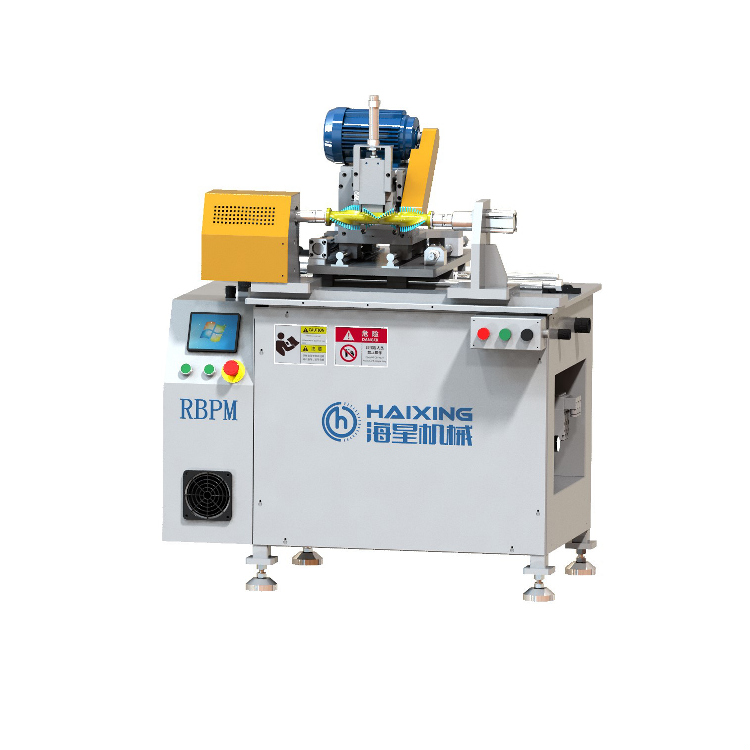
The Economic Realities of Modern Manufacturing
Running a competitive manufacturing business today means constantly battling the push-and-pull of rising overheads and the relentless demand for uncompromised product quality. For decades, assembling commercial and industrial brushes meant relying heavily on manual labor. Workers spent endless hours drilling, tufting, trimming, and inspecting items by hand. Yet, this heavy reliance on human hands created major operational bottlenecks, introduced human error into the mix, and drove expenses sky-high as labor markets tightened globally. Relying purely on traditional manual workflows is no longer sustainable for forward-thinking enterprises aiming for rapid global expansion and market leadership. Introducing advanced industrial brush making machine technology completely flips the script on conventional production floors. By cutting down unnecessary operational expenses, curbing raw material waste, and dramatically accelerating production cycle times, smart automation redefines what factory efficiency looks like, helping businesses navigate economic shifts with real confidence, operational agility, and structural resilience across diverse international markets.Breaking Free from Labor Bottlenecks with Smart CNC Integration
Let’s face it—finding reliable factory labor has gotten tougher, and wages keep climbing across major industrial hubs worldwide. Sticking to manual assembly can quickly choke your growth potential and limit daily production scaling. Modern computer numerical control machinery, particularly advanced multi-axis drilling and tufting setups, changes the competitive game entirely. These systems move with incredible velocity, pumping out hundreds of holes every single minute depending on how dense or complex the final brush needs to be. That kind of output easily matches or even surpasses what a whole team of manual workers could pull off across multiple work shifts. Integrating multi-axis automated systems frees facilities from the constant headache of relying on scarce, highly specialized manual labor. Furthermore, contemporary machines come equipped with intuitive touchscreens and pre-loaded operational programs that make setup smooth and straightforward. Workers do not need years of specialized technical training to manage complex cycles. Instead, human talent shifts away from repetitive, exhausting assembly tasks and moves into higher-value roles like quality oversight, strategic supervision, and process fine-tuning, which naturally boosts workplace morale and operational productivity across the entire organization.Precision Engineering and Smart Resource Management
When you look at your overall operating ledger, it is not just payroll that eats into corporate profits; raw material waste is a massive hidden cost that drains financial resources. Traditional and semi-automated setups often suffer from high scrap rates due to simple miscalculations, shifting materials, or manual errors during trimming and shaping phases. High-end industrial brush making machine systems tackle this problem head-on through state-of-the-art mechanical engineering. By utilizing precise servo-driven movements, adjustable drilling parameters, and sophisticated rotary tufting controls, these machines place every single filament down to a fraction of a millimeter. That level of microscopic precision drastically cuts down on wasted fiber, ensures uniform tuft density every single time, and keeps energy consumption tightly managed through smart power systems. Trimming material loss and saving on power translates directly into a healthier bottom line, giving businesses a serious edge in pricing and market competitiveness.Maximizing Machine Uptime and Securing Fast Returns
In any serious manufacturing environment, unexpected equipment downtime is the ultimate profit killer. When a line stops unexpectedly, delivery deadlines slip and profit margins evaporate rapidly. Modern brush-making equipment is built differently, incorporating modular and standardized components designed to make routine maintenance quick and hassle-free, boosting overall equipment effectiveness significantly. Many advanced setups feature independent drilling and tufting mechanisms, meaning maintenance teams can handle minor adjustments or servicing without dragging the entire production line to a complete halt. Keeping equipment running smoothly for the vast majority of operational hours completely changes your financial timeline. Uninterrupted, high-volume production means your initial capital investment gets absorbed much faster, paving a clear, stable path toward long-term profitability and reliable client fulfillment across international markets.Driving Long-Term Value and Scaling Growth with Haixing
At the end of the day, adopting state-of-the-art industrial brush making machine technology is the ultimate move for businesses looking to scale sustainably and dominate their competitive markets. By erasing labor friction, cutting material scrap, and maximizing daily uptime, companies unlock a whole new level of cost efficiency. Grounded in decades of specialized engineering experience, Haixing has built a strong reputation as an industry leader in advanced brush production solutions. Through robust global supply chain support, proven patented innovations like multi-station rotary tufting systems, and flexible machinery capable of handling everything from everyday household cleaning tools to specialized industrial polishing brushes, Haixing delivers the manufacturing power and reliability global partners need to stay ahead of the curve.Frequently Asked Questions About Industrial Brush Making Machines
How long does it typically take to achieve a return on investment when upgrading to an advanced automated system? Due to drastically reduced manual labor overheads, near-zero material scrap rates, and significantly higher daily output, most high-volume manufacturers achieve full capital payback within a short operational window of continuous production. Do factory operators need advanced programming skills to run modern CNC setups? No, contemporary machines feature intuitive touchscreen interfaces and pre-loaded programs, allowing standard floor workers to manage complex cycles with minimal training.

 EN