
 EN
EN
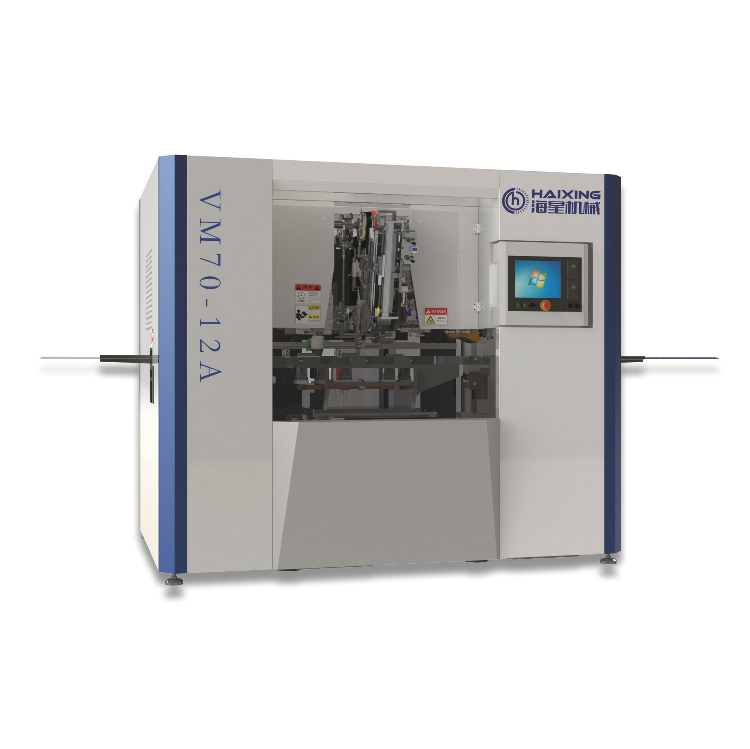
Labor Cost Reduction Through Automation and Precision Control
Modern brush drilling and tufting machines significantly reduce labor expenses through integrated automation systems. By replacing manual tasks with programmable workflows, manufacturers achieve consistent operational efficiency while minimizing human resource requirements.
Eliminating manual setup and intervention with intelligent brush drilling and tufting machine automation
Automation eliminates time-consuming manual adjustments during brush production cycles. Intelligent machines self-calibrate drill depths and tufting patterns using pre-programmed specifications, reducing setup time by up to 70% compared to conventional equipment. This precision ensures uniform product quality while freeing operators to oversee multiple machines simultaneously. Facilities adopting automated brush production lines report direct labor cost reductions of 30–50%, alongside a ~65% decline in process-related errors.
Multi-axis synchronization and programmable logic reducing operator dependency
Programmable Logic Controllers (PLCs) enable precise multi-axis coordination between drilling heads and tufting mechanisms—without constant human supervision. Synchronized servo motors maintain positioning tolerances within ±0.05 mm and automatically compensate for material variations. As a result, one technician can effectively manage 3–5 machines concurrently. Automated error detection also replaces many manual inspection stages, reducing quality control staffing needs by approximately 40%.
Minimizing Scrap and Rework via Consistent Process Execution
Precision-engineered brush drilling and tufting machines deliver unmatched consistency, drastically reducing material waste and costly rework. Operator error and process variability—historically responsible for up to $740k in annual scrap costs (Ponemon Institute, 2023)—are mitigated through automated calibration and closed-loop quality monitoring. Advanced sensors detect micron-level deviations in drill depth or tuft placement and trigger real-time corrections before defects propagate. This built-in prevention strategy achieves near-zero tolerance drift across high-volume runs, transforming scrap reduction from reactive correction into an inherent feature of the process.
Energy Efficiency and Predictive Maintenance in Modern Brush Drilling and Tufting Machines
Servo-driven systems cutting energy consumption by up to 40% vs. hydraulic alternatives
Modern brush drilling and tufting machines increasingly adopt servo-driven electric systems in place of traditional hydraulic components. Unlike hydraulic pumps—which run continuously to maintain pressure—servo motors draw power only during active motion. A typical servo-driven machine consumes up to 40% less electricity per production cycle, a benefit that compounds across multi-shift operations. Reduced heat generation also lowers facility cooling loads, while precise force control eliminates wasteful energy spikes.
IoT-enabled diagnostics extending uptime and lowering lifecycle maintenance costs
Embedded IoT sensors continuously monitor critical parameters—including spindle vibration, bearing temperature, and motor current draw—and transmit data to cloud-based analytics platforms. These platforms compare real-time readings against historical baselines to identify early signs of wear. Instead of fixed-interval maintenance, operators receive targeted alerts only when anomalies emerge—enabling just-in-time part replacement. This predictive approach minimizes unplanned downtime and avoids unnecessary replacements, lowering total lifecycle maintenance costs and steadily improving overall equipment effectiveness (OEE).
Total Cost of Ownership: Advanced vs. Conventional Brush Drilling and Tufting Machines
When evaluating equipment, the initial purchase price of a brush drilling and tufting machine often dominates decision-making. However, Total Cost of Ownership (TCO) reveals a more accurate picture by factoring in operating expenses, maintenance, downtime, and scrap rates over the machine’s lifecycle. Advanced brush drilling and tufting machines typically carry a higher upfront cost but deliver significantly lower TCO due to automation, precision, and durability.
Consider the following comparison:
| Cost Factor | Conventional Machine | Advanced Machine |
|---|---|---|
| Initial purchase price | Lower | Higher |
| Labor requirement | High (manual setup, intervention) | Low (automated, minimal operator) |
| Scrap and rework rate | Moderate to high | Low (consistent process execution) |
| Energy consumption | Higher (often hydraulic systems) | Up to 40% lower (servo-driven) |
| Planned maintenance frequency | Frequent (wear parts, hydraulic fluid) | Reduced (predictive diagnostics) |
| Unplanned downtime | Regular | Minimized via IoT monitoring |
| Long-term spare parts cost | Accumulates over time | Lower failure rates |
| Training and onboarding | Extensive for manual adjustments | Simplified via programmable controls |
Over a three-to-five-year period, the advanced machine often pays for itself through labor savings, material waste reduction, and lower energy bills. Manufacturers who shift to modern brush drilling and tufting equipment report a net cost reduction of 20–35% compared to continuing with outdated models (Industry Benchmark Report, 2024). This makes TCO analysis essential for any production facility aiming to improve profitability while maintaining quality.
FAQ
1. How do brush drilling and tufting machines reduce labor costs?
Automation eliminates manual tasks such as setup and calibration. This allows fewer operators to manage multiple machines, reducing labor requirements significantly.
2. What are the benefits of servo-driven systems?
Servo-driven systems cut energy consumption by up to 40%, lower cooling loads, and provide precise control, leading to more efficient production cycles.
3. How does predictive maintenance work in modern machines?
IoT sensors monitor equipment parameters and send alerts when anomalies occur, enabling timely part replacements and reducing unplanned downtime.
4. What does Total Cost of Ownership (TCO) mean?
TCO refers to the complete cost of owning a machine over its lifecycle, including purchase price, operating expenses, maintenance costs, and material waste.
5. Why is precision important in brush tufting and drilling?
Precision ensures consistent product quality, reduces material waste, and eliminates costly rework associated with manufacturing errors.
Table of Contents
- Labor Cost Reduction Through Automation and Precision Control
- Minimizing Scrap and Rework via Consistent Process Execution
- Energy Efficiency and Predictive Maintenance in Modern Brush Drilling and Tufting Machines
- Total Cost of Ownership: Advanced vs. Conventional Brush Drilling and Tufting Machines
- FAQ