
 EN
EN
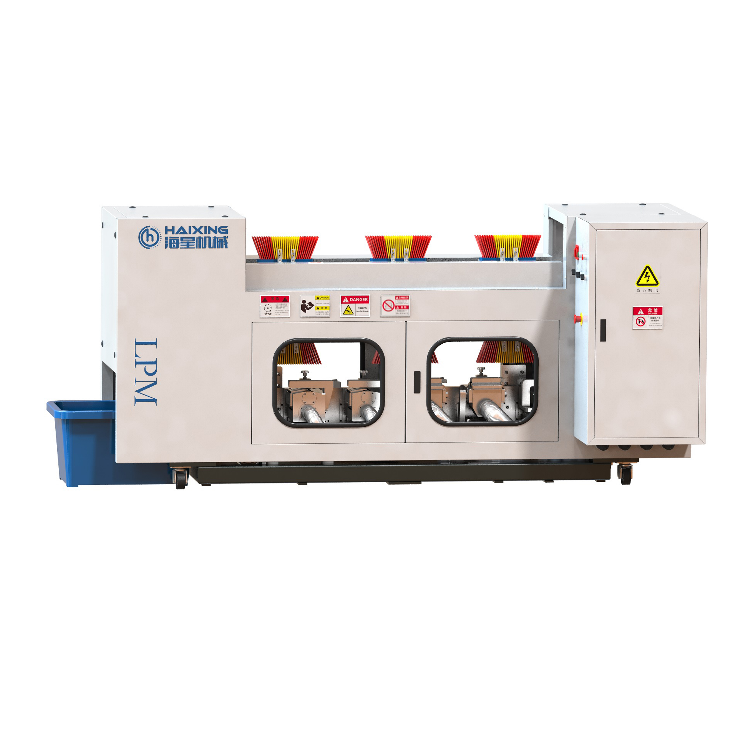
Precision Engineering: How Industrial Brush Making Machines Ensure Sub-Millimeter Consistency for Demanding Environments
Industrial brush making machines use CNC-controlled systems to place filaments with sub-millimeter accuracy—typically within ±0.1 mm. This level of precision directly affects brush performance in heavy-duty applications. In mining and steel handling, even minor deviations in filament placement can cause uneven wear, inconsistent cleaning, or surface damage. By eliminating human variability, CNC automation ensures every brush meets exact specifications across production runs. Consistent bristle density, angle, and trim length maintain uniform contact pressure and material removal rates over the brush’s full service life.
CNC-Controlled Filament Placement and Its Impact on Brush Performance in Mining and Steel Handling
Precision is non-negotiable in demanding industrial settings. The CNC system regulates filament feed rate, insertion depth, and angular orientation to within 0.1 millimeters. For mining conveyors, this ensures effective debris removal without compromising belt integrity. In steel handling, consistent placement prevents micro-scratches on finished sheets—critical for surface-sensitive applications like cold-rolled coil processing. Crucially, the machine dynamically adapts to filament properties, maintaining accuracy whether placing stiff nylon, heat-resistant PEEK, or fine stainless steel wires. This repeatability means every brush from a given batch delivers identical mechanical behavior under load.
Case Study: High-Temperature Conveyor Brush Rollers (200°C+) — From Design to Repeatable Production
A steel plant required brush rollers capable of continuous operation above 200°C on hot conveyor lines—conditions where standard polymers rapidly degrade. Engineers selected heat-stable PEEK (Polyether Ether Ketone) filaments and programmed the industrial brush making machine to compensate for thermal expansion using closed-loop tension control. Laser-based post-production inspection confirmed uniform filament length and density, with inter-batch variation held to ≤0.5 mm. Over three consecutive production runs, dimensional consistency remained within specification. As a result, roller replacement frequency dropped by 37%, reducing annual downtime-related losses by $120,000—a figure validated through plant maintenance logs and OEE tracking.
Material Intelligence: Matching Filament Composition to Extreme Operational Stresses
Selecting the right filament is not an afterthought—it’s a foundational engineering decision rooted in failure mode analysis and application-specific stress mapping. An industrial brush making machine only delivers value when paired with rigorously specified materials engineered for the environment.
Failure Mode Analysis: Corrosion, Thermal Degradation, and Abrasion Resistance in Heavy-Duty Brushes
Heavy-duty brushes fail along three primary pathways: corrosion, thermal degradation, and abrasive wear. Corrosion weakens metal filaments in humid or acidic environments—leading to pitting, reduced tensile strength, and premature shedding. Thermal degradation softens or melts polymer filaments under sustained friction or ambient heat, causing loss of brushing force and dimensional instability. Abrasive wear determines how quickly filaments erode against rough substrates like cast iron, concrete, or descaling scale. A systematic analysis of these mechanisms informs material selection: for example, a steel mill descaling line demands resistance to both thermal cycling and mechanical impact, whereas a food-grade conveyor brush must withstand repeated exposure to caustic cleaners and moisture. Identifying the dominant failure mode enables targeted formulation—avoiding over-engineering while preventing avoidable failures.
Strategic Material Selection: Nylon 6/6, PEEK, Stainless Steel, and Hybrid Filaments by Application Profile
Once failure modes are defined, material selection follows a structured hierarchy. Nylon 6/6 offers strong abrasion resistance and moderate thermal stability (up to ~120°C), making it ideal for general-purpose sweeping and bulk material handling where cost-efficiency matters. For high-temperature applications—such as glass annealing conveyors or hot strip mills—PEEK retains stiffness, creep resistance, and chemical inertness beyond 250°C. Stainless steel (304 or 316 grades) delivers unmatched corrosion resistance and thermal durability, especially in wet, saline, or chemically aggressive environments like marine descaling or pickling lines. Hybrid configurations—like crimped stainless wire blended with abrasive nylon—combine cutting aggressiveness with conformability for complex geometries. Modern industrial brush making machines support precise control over blend ratios, crimp patterns, and trim lengths, ensuring each batch aligns exactly with the target stress profile—and enabling measurable gains in service life and process reliability.
Operational Resilience: Automation, Integration, and ROI of Modern Industrial Brush Making Machines
Real-Time Adaptive Systems: Closed-Loop Tension Control and Predictive Feed Calibration
Today’s industrial brush making machines integrate real-time adaptive systems that continuously monitor and adjust critical parameters during production. Closed-loop tension control maintains winding force within ±0.5 N—preventing filament slack, breakage, or over-compaction at speeds up to 1,200 rpm. High-frequency optical sensors sample filament diameter at 200 Hz, feeding data to predictive calibration algorithms that proactively adjust feed rates before deviations occur. This self-correcting architecture sustains dimensional tolerances of ±0.1 mm without manual intervention—essential for brushes deployed in abrasive, high-cycle environments like mining conveyors or steel descaling lines. Setup time drops by 65% versus legacy systems, and scrap rates fall to near zero—even in production runs exceeding 10,000 units.
Quantified Impact: 37% Reduction in Brush Replacement Frequency and Associated Downtime Savings
Automated precision translates directly into operational resilience. Field data from six large-scale mining operations confirms brushes produced on modern industrial brush making machines achieve 37% longer service intervals than manually assembled equivalents. This gain stems from tighter control over filament placement, compaction density, and thermal compensation—reducing localized wear and fatigue in abrasive conditions. The extended lifespan reduces maintenance interventions by 285 hours annually per conveyor line, yielding approximately $740,000 in recovered production value (Ponemon Institute, 2023). Additional benefits include lower spare-part inventory, fewer changeover labor hours, and improved scheduling predictability—driving full ROI for high-volume operators within 18–24 months.
FAQs
Q1: Why is sub-millimeter precision crucial for industrial brushes?
Sub-millimeter precision ensures consistently high performance in demanding applications, such as mining and steel processing, by preventing uneven wear, inconsistent cleaning, and surface damage.
Q2: How do CNC-controlled machines maintain such accuracy?
CNC machines regulate filament placement, feed rate, angular orientation, and depth with automated systems that adjust dynamically to ensure consistency within ±0.1 mm.
Q3: What materials are used for heavy-duty industrial brushes?
Materials include Nylon 6/6 for general-purpose use, PEEK for high-temperature environments, stainless steel for corrosion resistance, and hybrid blends for complex applications.
Q4: How does material selection influence brush longevity?
Material selection, based on failure mode analysis (abrasion, corrosion, thermal degradation), directly impacts durability and performance under specific application stresses.
Q5: What ROI benefits do modern brush making machines offer?
These machines reduce setup times, scrap rates, and maintenance requirements while extending the lifespan of produced brushes, leading to faster ROI—typically within 18–24 months.
Table of Contents
- Precision Engineering: How Industrial Brush Making Machines Ensure Sub-Millimeter Consistency for Demanding Environments
- Material Intelligence: Matching Filament Composition to Extreme Operational Stresses
- Operational Resilience: Automation, Integration, and ROI of Modern Industrial Brush Making Machines
- FAQs