
 EN
EN
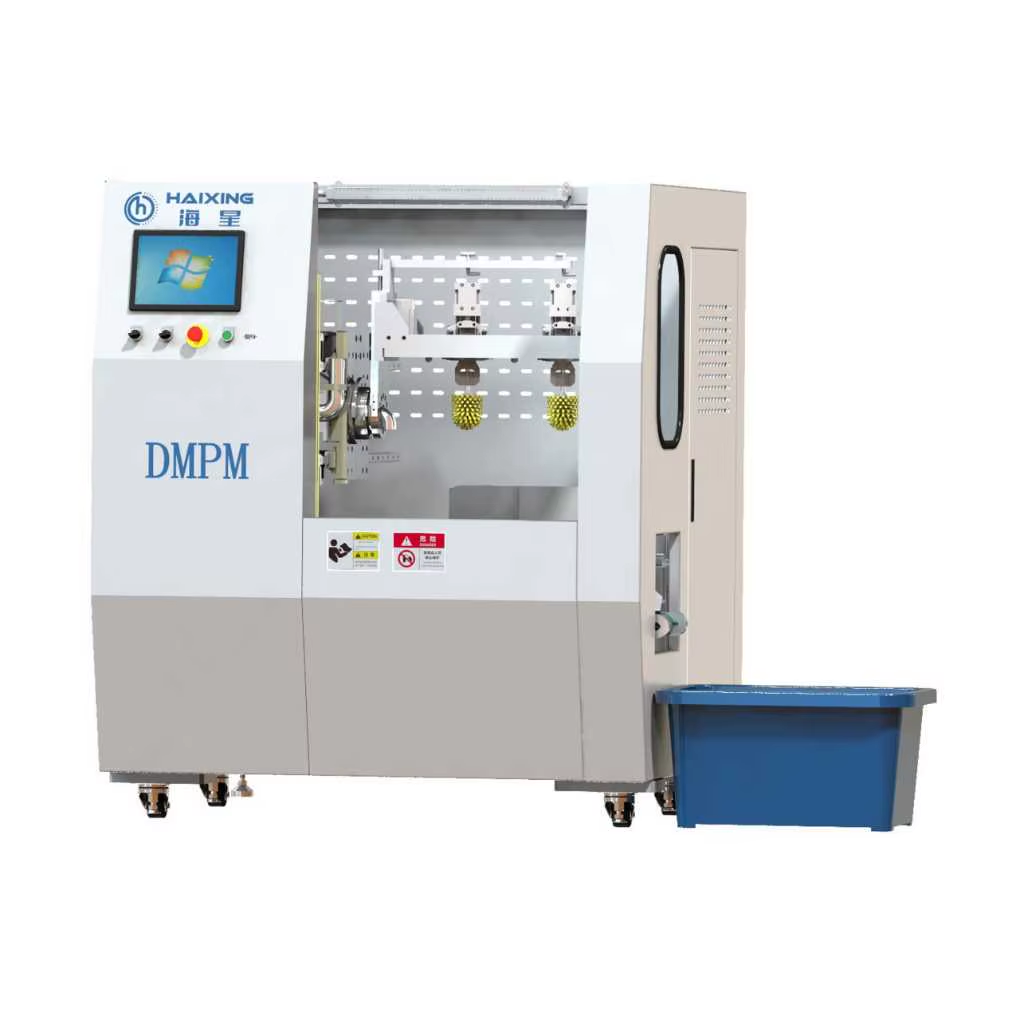
Transforming Industrial Production Through Advanced Automation and Precision Manufacturing
When evaluating modern precision manufacturing lines, industrial plant managers frequently overlook the profound impact of automated tooling fabrication on overall factory throughput and operational profit margins. As an experienced mechanical operations consultant and industrial production analyst, I have observed that upgrading from legacy manual assembly setups to a specialized industrial brush making machine fundamentally alters production dynamics across diverse manufacturing facilities. Modern industrial enterprises demand strict adherence to tight dimensional tolerances, uniform filament distribution, and consistent knot retention across diverse commercial cleaning, surface conditioning, and polishing applications. In my practical consulting engagements with global brushware manufacturers, transitioning to automated CNC-controlled production environments eliminates human fatigue-induced assembly errors, reduces raw material waste by up to twenty-five percent, and ensures absolute component repeatability. This technological shift is not merely about accelerating cycle times; it represents a comprehensive operational overhaul that elevates end-product quality, minimizes costly factory downtime, and secures a sustainable competitive advantage in an increasingly demanding global marketplace.
Engineering Excellence and Mechanical Precision in Filament Integration and Control
Achieving superior manufacturing precision relies heavily on the mechanical synergy between automated tufting heads, high-speed drilling units, and precise wire-drawing mechanisms within modern production lines. When facilities invest in an advanced industrial brush making machine, the integration of programmable multi-axis motion controls enables the precise positioning of synthetic, natural, or metal wire filaments into intricate wooden, plastic, or metallic block substrates. In my professional engineering reviews of high-performance manufacturing cells, automated high-speed clamping systems maintain strict perpendicularity and uniform insertion depth, which directly prevents filament shedding during aggressive industrial sweeping or deburring operations. Furthermore, sophisticated software interfaces allow operators to adjust tufting density, hole depth, and pattern angles with microscopic accuracy. By replacing erratic manual labor with automated precision engineering, manufacturers eliminate internal component stress, ensure flawless structural integrity, and produce high-performance industrial brushes that consistently withstand severe mechanical friction, chemical exposure, and extreme thermal operating conditions.
Optimizing Operational Efficiency and Minimizing Factory Overhead Expenses
Operational efficiency in modern manufacturing is defined by the seamless balance between cycle speed, energy consumption, and labor optimization across the factory floor. In my direct observations of industrial plant operations, deploying a state-of-the-art industrial brush making machine dramatically streamlines workflow by consolidating multiple traditional fabrication steps—such as pre-drilling, staple insertion, trimming, and shaping—into a single automated, continuous production cycle. This consolidation drastically reduces work-in-progress inventory holding costs and eliminates the bottleneck of manual quality sorting. While initial capital investment requires careful budgeting, the reduction in labor dependency and the elimination of manual assembly errors translate into a rapid return on investment, typically achieved within eighteen to twenty-four months of continuous multi-shift operation. Additionally, modern automated systems feature energy-efficient servo motors and intelligent power management that lower overall electrical consumption per finished unit, thereby supporting corporate sustainability goals while significantly lowering long-term factory overhead expenses.
Total Cost of Ownership and Long-Term Equipment Reliability
Evaluating the true value of industrial manufacturing equipment extends far beyond the initial purchase price and immediate output volume; it requires a rigorous analysis of overall component durability, total cost of ownership, component wear characteristics, and ongoing maintenance reliability. Premium automated fabrication systems are engineered with heavy-duty cast-iron or reinforced steel chassis to absorb high-frequency mechanical vibrations during continuous high-speed tufting cycles. Based on comprehensive equipment maintenance audits, proper preventive care paired with high-grade tungsten carbide drilling tools ensures that an industrial brush making machine maintains peak operating performance for over a decade with minimal unscheduled downtime. Furthermore, standardized modular tooling components allow maintenance technicians to execute rapid format changes between cylindrical roller brushes, disc brushes, and strip brushes without extensive technical delays. This exceptional mechanical durability and operational versatility protect capital investments, safeguard production schedules, and ensure that manufacturing plants can reliably fulfill large-scale commercial orders on tight delivery timelines.
Strategic Implementation and Future-Proofing Production Line Performance
Successfully integrating modern manufacturing automation requires a structured implementation strategy that aligns equipment selection with long-term business growth objectives and shifting market demands. Industrial enterprises must evaluate their specific production volume requirements, raw material variations, and product customization capabilities before finalizing equipment specifications. In my advisory experience working with growing manufacturing businesses, partnering with established equipment manufacturers who offer comprehensive technical training, rapid spare parts availability, and responsive remote diagnostic support is critical to avoiding costly startup delays. When deploying an efficient industrial brush making machine, facility managers must also establish standardized quality control protocols to monitor filament retention, hole alignment, and tufting density continuously across every operational shift. By strategically modernizing their production floors with advanced automated tooling systems, forward-thinking manufacturers can successfully elevate their product quality, expand their catalog offerings into specialized technical sectors, and secure enduring profitability within the competitive global brush manufacturing industry. Furthermore, ongoing investments in operator training and preventative maintenance schedules ensure that production lines remain resilient against market fluctuations and technological obsolescence for many years to come.
Table of Contents
- Transforming Industrial Production Through Advanced Automation and Precision Manufacturing
- Engineering Excellence and Mechanical Precision in Filament Integration and Control
- Optimizing Operational Efficiency and Minimizing Factory Overhead Expenses
- Total Cost of Ownership and Long-Term Equipment Reliability
- Strategic Implementation and Future-Proofing Production Line Performance