
 EN
EN
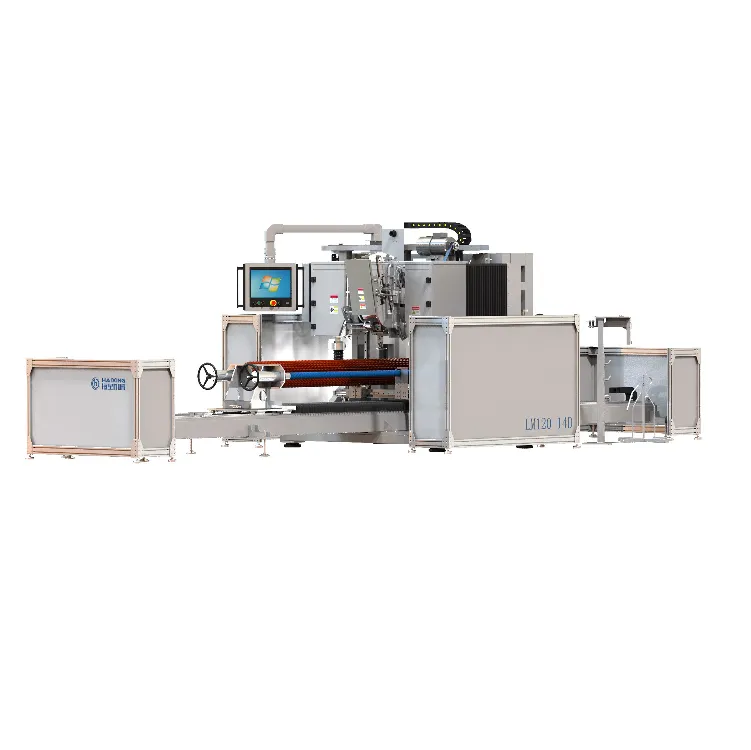
Unlocking Efficiency in Cleaning Tool Production
In the highly competitive world of modern manufacturing, success is often dictated by the ability to balance speed with uncompromising precision. Toilet brush making machines represent the pinnacle of automated production for this essential household item. By shifting from labor-intensive manual assembly to advanced CNC-controlled processes, factories can eliminate the human errors that often lead to inconsistent bristle density or misaligned tufts. These industrial systems are specifically engineered to handle the complex, multi-dimensional tasks required to create durable, high-performing cleaning tools. By optimizing every stage of the drilling and tufting sequence, manufacturers are able to deliver a more reliable product that stands up to the rigors of daily use while maintaining a sleek, professional appearance that resonates with consumers across diverse global markets. The transition toward full automation represents a fundamental shift in how producers view their capability to meet growing market demands without compromising on product integrity.
Inside the Mechanism of Automated Brush Creation
At a technical level, the operation of these machines is a marvel of coordinated motion. The cycle begins with the automatic feeding of the brush handle into the work area, where a high-speed, servo-driven drill assembly creates precisely spaced sockets. Unlike older, mechanical cam-driven machines, modern systems allow for seamless adjustments in drilling patterns. Immediately following the drilling phase, the tufting head descends to secure the bristles. This part of the process is critical; whether the bristles are synthetic or natural, they must be anchored firmly using metal staples to ensure they do not shed during intensive cleaning tasks. By employing multi-axis linkage technology, these machines can easily navigate complex handle curvatures, providing manufacturers with the flexibility to produce a wide range of brush designs without needing to replace the entire production line. Each motion is calculated, refined, and executed with high fidelity to ensure the structural longevity of every single item produced.
Driving Business Agility and Strategic ROI
Investing in automated manufacturing technology is rarely just about producing more brushes; it is about building a business model that can adapt to changing market demands. Leading-edge systems now feature intuitive touchscreen control panels that allow operators to store and recall a vast array of unique production configurations. This capability minimizes the time spent on tooling changeovers, which is a common bottleneck for high-volume producers. When a facility can switch between different brush head shapes, bristle materials, or tufting densities in a matter of moments, the overall factory agility improves drastically. This reduction in downtime not only lowers operational costs but also increases the return on investment per production unit, making it easier for companies to scale operations profitably as they secure new contracts or enter new geographic markets. The ability to pivot quickly is what separates thriving manufacturers from those struggling to keep pace with industry trends.
The Critical Role of Precision in Product Quality
Quality assurance in the brush manufacturing sector begins long before the final packaging phase. It is embedded directly into the machine settings. Every adjustment in the CNC software—from the depth of the drill bit to the precise angle at which the tufting wire is inserted—directly influences how effectively the final product performs. A brush that is built with consistent bristle placement will maintain its structural integrity far longer than one produced with looser, less stable tufting. By utilizing high-durability, standardized industrial components, these machines maintain operational stability even under the intense pressure of continuous mass production. This level of technical reliability is the cornerstone of building long-term brand reputation, as it ensures that retailers and end-users receive products that consistently meet high-quality standards without fail. Maintaining this level of excellence requires a sophisticated understanding of mechanical engineering and a commitment to refining production processes over time.
Leveraging Advanced Manufacturing Solutions for Long-Term Growth
For businesses operating in the industrial and household cleaning sectors, selecting the right partner for manufacturing infrastructure is a decision that impacts the bottom line for years. HAIXING CNC has developed a robust reputation by providing comprehensive solutions that go beyond simple equipment sales. By focusing on deep technical accumulation and consistent innovation, HAIXING CNC supports manufacturers in navigating the challenges of modern production, from initial design prototyping to the optimization of high-speed assembly lines. Through the integration of versatile multi-axis technology and a commitment to standardized performance, HAIXING CNC helps partners build resilient, efficient, and cost-effective supply chains. Leveraging such deep-seated industry experience allows global brush makers to focus on brand expansion and market share, confident that their production capabilities are backed by decades of proven engineering expertise and reliable, one-stop manufacturing support. The partnership approach adopted by HAIXING CNC fosters a collaborative environment where production efficiency is continuously improved, ensuring that partners remain at the forefront of the cleaning tool industry regardless of evolving global market shifts. Continued investment in such collaborative manufacturing partnerships serves as a catalyst for sustainable competitive advantage.