
 EN
EN
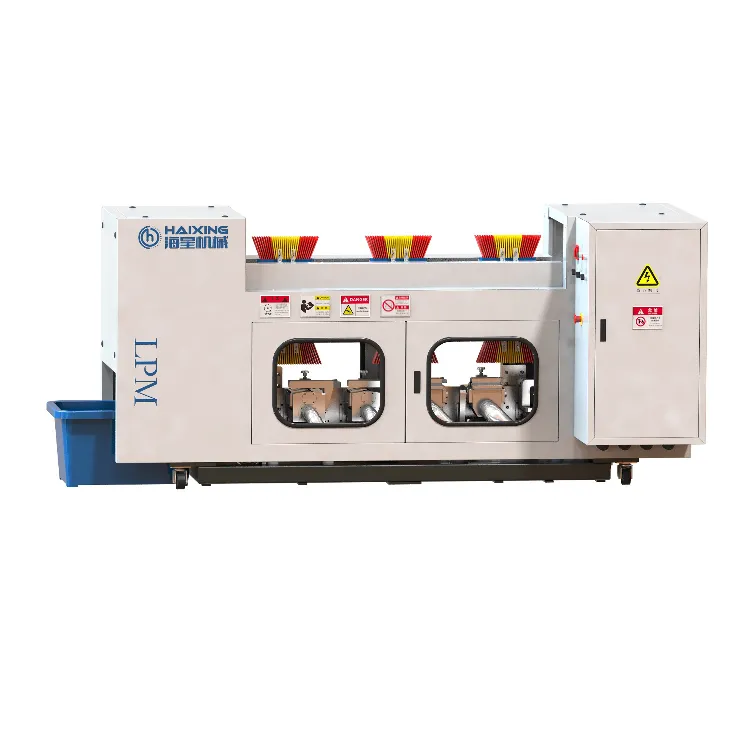
For manufacturers entering or expanding in the oral care brush market, equipment selection is a critical variable in determining product quality consistency, production flexibility, and total cost of ownership. A tooth brush making machine must execute precise drilling and filament placement within tighter tolerances than most household or industrial brush types — the geometry of a toothbrush head, the density and angle of filament tufts, and the finish of each hole directly affect cleaning efficacy and consumer safety perception. This article examines the technical features that distinguish high-quality toothbrush manufacturing equipment and the evaluation criteria buyers should apply when qualifying a supplier.
Precision Drilling with Servo-Driven Hole Placement
The most fundamental quality differentiator in a tooth brush making machine is the precision of its drilling system. Toothbrush heads have a high density of closely spaced holes — often arranged in curved or angled patterns to achieve specific cleaning angles — which requires the drilling spindle to position accurately within tight tolerances. Servo-driven drilling systems provide closed-loop position control that mechanical cam-driven systems cannot match in repeatability. In CNC toothbrush making machines, the hole coordinate program is executed with servo precision on each production cycle, ensuring that every unit in a run meets the same hole spacing, depth, and angle specifications. This is particularly critical when a manufacturer produces multiple toothbrush SKUs with different tuft configurations: a machine with precise servo positioning can switch between programs and reproduce the exact geometry of each design without requiring manual calibration between runs.
Small-Diameter Hole Capability for Oral Care Brush Tooling
Toothbrush filament tufts are significantly smaller in diameter than industrial or household brush tufts. The typical filament bundle used in oral care brushes requires drilling holes in a range suited to fine-tuft placement — smaller and more precisely spaced than those used in paint brushes or scrub brushes. A toothbrush making machine must support drilling in this fine range while maintaining consistent hole quality across the full production run. The VS40 series of oral care brush making machines is designed specifically for this application, offering configurations suited to toothbrush head geometry and fine-pitch tuft placement. When evaluating a machine for toothbrush production, confirm the minimum hole diameter the spindle can reliably drill, the maximum hole count per brush head the machine can program, and whether the machine supports the tuft density required by your target product specifications.
Multi-Color Filament Placement for Consumer Product Differentiation
Consumer toothbrush products frequently use two- or three-color filament configurations as a product differentiation feature and to provide indicator filament functions — such as color-fading bristles that signal when the brush should be replaced. A tooth brush making machine that supports multi-color filament placement in a single production cycle eliminates the need for separate filament insertion steps or secondary operations. This is achieved through configurable filament feeding systems that deliver different filament colors to designated tuft positions in the programmed sequence. For manufacturers producing OEM toothbrushes for brands that specify color-coded indicator filament, confirming this capability as part of machine specification review is essential. Request confirmation of the maximum number of filament colors supported per production cycle and whether the filament feeding system accommodates the specific filament diameter and material types your products require.
CNC Program Storage for Multiple Toothbrush SKU Management
Oral care product lines commonly include multiple brush head designs — soft, medium, and firm filament variants, different head sizes for children and adults, and specialty designs for orthodontic or sensitive use. Managing these variants on a single manufacturing platform requires a machine capable of storing and recalling precise tuft programs for each SKU. A CNC tooth brush making machine with program storage capacity of up to 1,000 individual brush configurations allows production facilities to run multiple toothbrush variants without manual coordinate re-entry between runs. This reduces setup error risk, compresses changeover time, and creates a documentable record of the tufting parameters used for each production batch — a requirement in quality management systems serving regulated consumer product categories. The ability to retrieve stored programs also allows production managers to revalidate specifications against original program parameters after machine maintenance events, which supports process control consistency.
Application Scenario: Toothbrush OEM Manufacturer Qualifying for Children's Brush Production
A toothbrush OEM manufacturer receives an inquiry from a children's oral care brand requiring a children's brush head with a specific small head size, three-zone color indicator filament, and a soft-rounded tuft end-rounding specification. On their existing equipment, they can produce standard adult toothbrush heads but lack the program configurations and fine-tuft placement precision needed for the children's specification. When they evaluate toothbrush making machines capable of meeting these requirements, they prioritize machines with servo-driven fine-diameter drilling, multi-color filament feeding, and CNC program storage sufficient to manage the children's and adult brush head programs in parallel. They also require CE certification and SGS audit documentation to satisfy their customer's supplier approval process. After qualifying a machine with these capabilities and confirming the supplier provides remote technical support and on-site commissioning, they successfully validate the children's brush head specification and begin production.
Supplier Technical Depth and After-Sales Service Commitments
A tooth brush making machine's long-term production value depends not only on its specifications but on the manufacturer's ability to support the machine throughout its service life. For oral care brush production — where product quality standards are high and customer approval processes are formal — the supplier's service infrastructure is a direct operational risk factor. Key service commitments to confirm include: remote technical support availability, defined response time for fault resolution, on-site commissioning and acceptance testing protocols, and the availability of a bilingual touchscreen HMI that allows local engineering staff to navigate diagnostics without language barriers. A supplier with documented engineering depth — such as more than 70 in-house technical engineers and more than 40 years of brush machine manufacturing experience — offers greater confidence in post-sales technical support quality than a supplier without verifiable manufacturing history.
Frequently Asked Questions
What is the typical hole diameter range for a toothbrush making machine?
The hole diameter range for oral care brush making machines is smaller than that used in household or industrial brush machines, as toothbrush filament tufts require fine-pitch hole placement. The specific range depends on the machine series and the filament specifications of the target product. When evaluating a supplier, request the confirmed minimum drill diameter and maximum hole count per head for the specific model being considered.
Can a toothbrush making machine be used for other types of brushes?
Depending on the machine's axis configuration, hole diameter range, and filament feeding system, some oral care brush machines can be adapted to produce other brush types with similar specifications. However, machines designed specifically for oral care brush tooling — such as those in the VS40 series — are optimized for toothbrush head geometry and fine-pitch tuft placement. Evaluate whether the machine's specifications overlap with your other product requirements before purchasing for dual-purpose production.
What certifications should a toothbrush making machine manufacturer hold?
For buyers producing toothbrushes destined for international consumer markets, CE certification verifies that the machine meets European safety standards, while SGS and ISO documentation provides independent verification of production quality systems. These certifications support supplier approval processes required by consumer product brands and retail buyers who must validate their supply chain to regulatory and commercial standards.
Table of Contents
- Precision Drilling with Servo-Driven Hole Placement
- Small-Diameter Hole Capability for Oral Care Brush Tooling
- Multi-Color Filament Placement for Consumer Product Differentiation
- CNC Program Storage for Multiple Toothbrush SKU Management
- Application Scenario: Toothbrush OEM Manufacturer Qualifying for Children's Brush Production
- Supplier Technical Depth and After-Sales Service Commitments
- Frequently Asked Questions