
 EN
EN
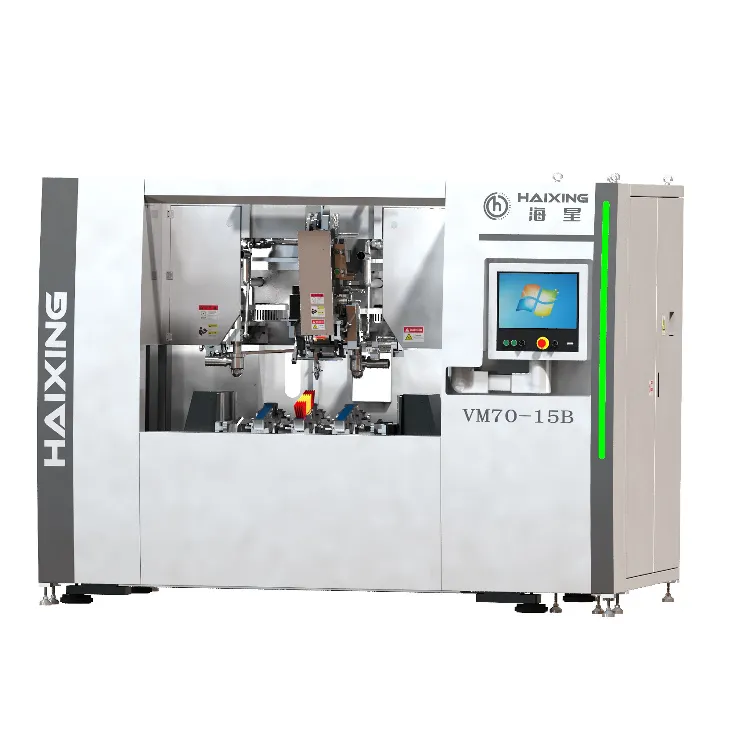
The term "intelligent" is used loosely across manufacturing equipment marketing — but in the context of brush tufting systems, it refers to specific, measurable capabilities: CNC-driven axis control, programmable filament placement, data-based program management, and integrated diagnostics. For brush manufacturers evaluating whether to invest in an intelligent brush tufting system, the relevant question is not whether the system is labeled intelligent, but what specific production problems it solves and what technical evidence supports those claims. This article examines the core capabilities that distinguish intelligent brush drilling and tufting machine systems from conventional alternatives, and what operational outcomes those capabilities deliver.
CNC Servo Control: The Foundation of Intelligent Tufting
The intelligence in a brush tufting system begins with the control architecture. Conventional tufting machines use mechanical cam-driven or pneumatic systems that execute a fixed motion sequence. CNC servo-driven systems use closed-loop feedback between the servo motor, encoder, and control unit to execute programmable hole coordinates, approach angles, and tufting depth with repeatability that mechanical cam systems cannot match. In five-axis CNC configurations — such as those used in the VM70 series of brush drilling and tufting machines — each axis movement is independently controlled and can be programmed to approach the brush body from any required angle within the machine's working envelope. This servo control foundation is what enables angled hole placement for ergonomic brush handles, curved filament patterns for specialty brushes, and consistent sub-millimeter precision across long production runs.
Patented Multi-Station Rotary Tufting Control
Beyond standard five-axis servo control, advanced brush tufting systems incorporate specialized control architectures for multi-station operation. The patented multi-station rotary tufting control system — a technology developed within the brush machine manufacturing industry — enables coordinated tufting across multiple spindle stations in a single machine cycle. This architecture allows one machine to execute tufting operations at multiple brush body positions simultaneously, increasing effective throughput without requiring proportionally more floor space or operator staffing. For production managers evaluating throughput per square meter of factory floor, multi-station rotary systems offer a more favorable output density than expanding a fleet of single-station machines. When evaluating a supplier's claim of multi-station capability, request documentation of the control system architecture and the patented technology basis — independently verifiable patents provide stronger confidence than unverified marketing claims.
Intelligent Program Management: Storing and Recalling Up to 1,000 Brush Configurations
A distinguishing feature of intelligent brush tufting systems is the capacity to store and precisely recall large numbers of brush programs. A system capable of storing up to 1,000 individual brush programs transforms the machine from a single-product production asset into a flexible manufacturing platform. When an order for a brush type not recently produced arrives, the operator selects the stored program rather than reconfiguring mechanical components or re-entering tufting coordinates. This reduces setup error, eliminates the need for skilled operators to manually re-derive tufting coordinates from technical drawings, and compresses changeover time. For quality management purposes, program storage also creates an auditable production record: the tufting parameters used for each production run are retrievable, which supports non-conformance investigation and process consistency documentation.
Bilingual Interface and Operator Accessibility
Intelligent brush tufting systems designed for international deployment typically include bilingual control interfaces — often Chinese and English — on the machine's touchscreen HMI. This is not merely a convenience feature; it has measurable implications for training time, operator error rate, and documentation quality in facilities where technical staff may not be fluent in the machine's primary programming language. When operators can read error messages, set parameters, and navigate maintenance menus in their working language, the likelihood of incorrect program entry or delayed fault response decreases. For buyers at facilities with multilingual engineering teams or high operator turnover, a bilingual HMI is a risk reduction feature that should be explicitly confirmed as part of machine specifications review.
Application Scenario: Flexible Production Across Multiple Brush Product Lines
A brush manufacturer producing oral care brushes, industrial cleaning brushes, and household scrub brushes on a single intelligent tufting platform demonstrates the practical value of program management capability. Oral care brush heads require precise angular hole placement and fine-diameter drilling — the kind of specification that differs significantly from an industrial scrub brush with larger diameter tufts. On a conventional machine, switching between these product families would involve substantial reconfiguration time and potential for setup errors. On an intelligent five-axis brush drilling and tufting machine with 1,000-program storage and servo-driven positioning, the transition is a program selection step, after which the machine executes the correct hole coordinates, approach angles, and tufting depth for the new brush type. This multi-product flexibility is a documented capability of the VM70 series platform, which supports both oral brush tooling (VS40 series) and standard industrial and household brush production within overlapping machine specifications.
Standardized Components and Modular Architecture as Reliability Indicators
Intelligence in a brush tufting system also extends to how the machine is designed for maintainability. A modular platform where components are standardized across machine generations reduces the risk that a discontinued part will create extended production downtime. When a machine manufacturer designs their product line around interchangeable modules — allowing a fixture, spindle cassette, or control component to be swapped without custom machining — they are building reliability into the system's architecture rather than relying solely on build quality at the point of manufacture. For buyers evaluating long-term production reliability, confirming component standardization across the manufacturer's machine lineup is a practical due diligence step that is often overlooked in favor of headline specifications.
Frequently Asked Questions
What does "intelligent" mean in the context of a brush tufting machine?
In brush tufting machine terminology, intelligent refers to CNC servo-driven axis control, programmable tufting coordinates, digital program storage and recall, and integrated HMI diagnostics. It distinguishes these systems from conventional cam-driven or pneumatic tufting machines, which execute fixed mechanical motion sequences without programmable flexibility.
How does a patented multi-station rotary tufting control system improve production efficiency?
A multi-station rotary system coordinates tufting across multiple brush body positions within a single machine cycle, allowing the machine to simultaneously execute tufting operations at more than one position. This increases throughput per machine cycle without requiring additional floor space proportional to the output gain, which improves production density compared to adding single-station machines.
Is it possible to audit tufting parameters from previous production runs on an intelligent brush tufting system?
Yes, on systems with digital program storage, the tufting parameters — including hole coordinates, approach angles, tufting depth, and filament configuration — stored in each brush program are retrievable after the production run. This supports quality management processes including non-conformance investigation, process validation documentation, and customer audit responses.
Table of Contents
- CNC Servo Control: The Foundation of Intelligent Tufting
- Patented Multi-Station Rotary Tufting Control
- Intelligent Program Management: Storing and Recalling Up to 1,000 Brush Configurations
- Bilingual Interface and Operator Accessibility
- Application Scenario: Flexible Production Across Multiple Brush Product Lines
- Standardized Components and Modular Architecture as Reliability Indicators
- Frequently Asked Questions