
 EN
EN
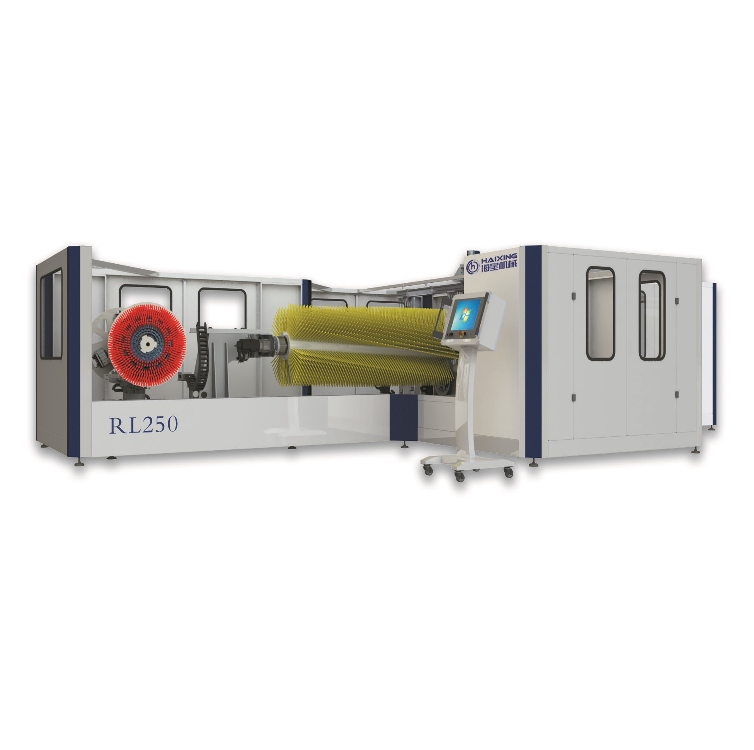
Core Production Challenges Driving the Shift to Brush Making Machines
Inconsistent Tufting and Trimming Precision in Manual Processes
When making brushes by hand, there's just not enough consistency needed for really precise work. A small mistake matters a lot here. Think about something as tiny as half a millimeter off in where those bristles go, and suddenly the whole thing stops working properly in things like medical tools, airplane parts, or electronic components. People get tired when doing repetitive tasks all day long, which leads to problems we can actually see on the finished product. Trims end up different lengths, and sometimes the bristle clusters look patchy instead of uniform across the surface. Because of these issues, factories have no choice but to spend extra time checking every single brush after it comes off the line. Some companies report that quality control alone eats away at around twenty percent of their entire production schedule.
Labor Shortages, Rising Wages, and Scalability Bottlenecks
The shortage of skilled workers is getting worse by the day. Brush makers are struggling to find people who know how to do hand tufting work, with about three quarters of companies saying they can't hire enough specialists. Wages for these jobs have gone up around 18% since 2021 too. What happens next? Well, when there's a sudden increase in orders, manual production lines just can't keep up without bringing on new staff, going through all that onboarding stuff, and spending time training everyone properly. And guess what? During busy seasons, customers often wait anywhere from three to five whole weeks for their orders to arrive. That kind of delay really hurts when trying to stay responsive to market needs and keeps clients coming back for more business.
High Rework Rates and Customer Rejections Due to Quality Variability
The problem of inconsistent quality keeps driving up costs in manufacturing. When it comes to brush production done by hand, companies typically see around 15 to 20 percent of their output needing rework because of issues like crooked bristles, uneven glue application, or mistakes during trimming. These kinds of defects really hit hard in precision engineering where measurements need to be accurate down to fractions of a millimeter. Looking at data from our own 2023 study involving six major suppliers shows just how bad things get financially. On average, each plant lost about $74k every month due to all these problems with wasted raw materials and extra labor needed to fix what went wrong initially.
Tangible ROI: Productivity Gains and Quality Improvements from Brush Making Machines
Up to 3.2x Throughput Increase Across Drilling, Tufting, and Flagging
Automatic brush making machines get rid of those annoying human speed limits by combining drilling, tufting, and flagging all in one smooth operation. These systems don't have those stop-and-go moments between stages because they're controlled by servos that keep everything running at the same pace. The production boost? Around 3 times faster than what people can manage manually. Take this for instance: while a good worker might manage about 15 tufts an hour, these machines knock out over 48 in the same time frame and keep going strong without any quality drop off. But it's not only about going faster. Companies save money on labor costs and can handle bigger volumes, which means those big orders that used to eat into profits now become real money makers when scaled properly.
Sub-0.1mm Tolerance Control Enables Premium Engineered Brush Applications
With precision automation, tufts can be placed repeatedly within about 0.08mm accuracy, which meets those really tight specs required by things like medical device cleaning tools, aerospace brush preparation, and sensitive electronics work where static is a concern. The system uses lasers to guide positioning while providing instant feedback on force applied, so it adjusts both angle and pressure as needed during operation. This eliminates problems we see all the time with manual methods such as loose fibers sticking out or uneven trimming across surfaces, something that causes roughly 14% of products made manually to get rejected later on. What's interesting is how this level of control opens doors to premium markets too. Take conductive brushes used specifically for cleaning printed circuit boards, or antimicrobial versions designed for endoscopic equipment maintenance. Manufacturers report seeing around 23% better profit margins when they switch from standard production to these specialized items because customers are willing to pay extra for that kind of exactness.
FAQ
Why is there a shift towards brush making machines?
The shift towards brush making machines is driven by challenges in manual production such as inconsistent tufting, trimming precision, labor shortages, rising wages, and high rework rates that occur due to quality variability. Machines offer improved consistency and efficiency.
How do brush making machines improve productivity?
Brush making machines enhance productivity by automating tasks and eliminating human speed limitations, resulting in a throughput increase of up to 3.2 times compared to manual methods.
What accuracy do brush making machines offer?
Brush making machines offer sub-0.1mm tolerance control with accuracy around 0.08mm, enabling premium applications in industries requiring precision such as medical and aerospace sectors.