
 EN
EN
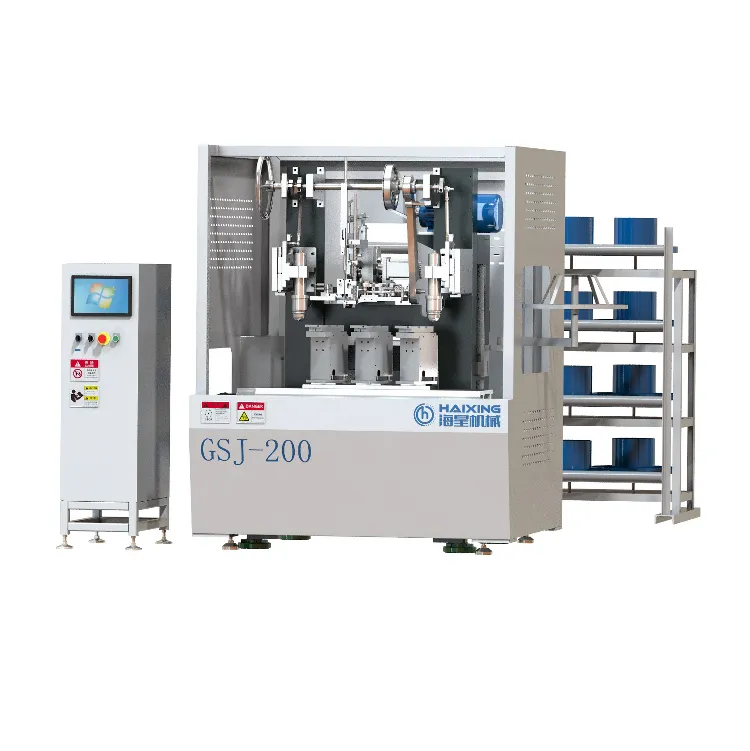
Selecting the right industrial brush making machine is one of the most consequential decisions a brush manufacturer can make. A mismatched machine can restrict your product range, limit your output capacity, and force costly retrofits. Yet the market offers dozens of configurations — from semi-automatic single-head units to fully CNC-driven multi-head systems — and the technical gap between them is significant. This guide breaks down the key selection criteria that procurement managers and production engineers should evaluate before committing to a purchase.
Understanding the Core Machine Types
The industrial brush making machine category covers several distinct equipment types, each suited to different production goals. Drilling and tufting machines — also called filling machines — simultaneously drill holes and insert filament bundles into the brush body. Five-axis CNC models, such as those in the VM70 series, are capable of processing complex curved or angled brush surfaces that flat-axis machines cannot reach. By contrast, gantry-type machines like the LM150-15B are designed for large-format flat brushes used in industrial cleaning or surface treatment applications. A roller brush machine such as the RL-250 handles cylindrical brushes and spiral-wound configurations. Identifying which brush types your production line requires is the essential first step before evaluating any machine specifications.
Key Technical Parameters That Affect Output Quality
Once you know the brush types you need to produce, the next step is evaluating technical specifications against your quality and volume requirements. Tufting speed directly affects throughput: machines in the VM70 series operate at up to 500 tufts per minute, which is relevant for high-volume orders of standard household or industrial brushes. Hole diameter range is equally important — the VM70-15B supports a drilling range of 3.0 mm to 8.0 mm with servo-driven precision, which accommodates most synthetic and natural filament bundle sizes used in commercial brush manufacturing. If your products require fine-pitch multi-color filament placement, you need a machine platform that supports at least two tufting methods — flat wire and round wire — and can store multiple brush programs in memory. Five-axis control allows the drill head to approach the workpiece from multiple angles, which is essential for ergonomic handle brushes, specialty industrial brushes, and oral care tooling. Power consumption and machine weight are also factors for facility planning: the VM70-25B, for example, draws 6.1 to 7.7 kW and weighs between 3,200 and 4,000 kg, which influences electrical load planning and floor reinforcement requirements.
Program Storage and Operator Interface Flexibility
For production facilities running multiple brush SKUs — common in OEM-contract manufacturing — the ability to store and recall brush programs quickly is a practical differentiator. A machine platform that supports storage of up to 1,000 individual brush programs reduces changeover time between orders and minimizes operator error during setup. Bilingual touchscreen interfaces (Chinese and English) on CNC brush machines reduce training time in facilities with multilingual workforces and simplify operator handover documentation. Standardized part design across machine components also reduces spare parts inventory complexity and shortens repair downtime, since interchangeable modules can be swapped without custom machining.
Modular Platform Design and Long-Term Scalability
A modular machine platform provides an important cost-of-ownership advantage over single-purpose machines. When a brush manufacturer's product mix evolves — for example, adding industrial floor brush production to an existing household brush line — a modular platform allows tooling and fixture changes rather than full machine replacement. Manufacturers with documented modular architecture, such as those producing the VM70 series as a scalable multi-head platform, allow buyers to expand capacity by adding heads or upgrading spindle configurations rather than purchasing entirely new equipment. Before finalizing a procurement decision, request technical documentation on upgrade path options, available head configurations, and compatibility between machine generations.
Application Scenario: Multi-SKU Brush Manufacturer Qualification
Consider a brush manufacturer producing household scrub brushes, paint brushes, and industrial wire brushes across three separate product lines. When they evaluate a new brush making machine supplier, they require a machine capable of switching between flat-wire and round-wire tufting, supporting hole diameters from 3.0 mm to 8.0 mm, and storing programs for over 200 SKUs without manual reprogramming. They also need third-party verification of machine quality — typically CE certification and SGS audit documentation — to satisfy their customers' supplier approval requirements. Suppliers that can demonstrate these capabilities, provide remote technical support, and conduct on-site commissioning with trained technicians offer a lower total cost of qualification compared to suppliers who only provide hardware without post-installation service.
Supplier Qualification Criteria Beyond the Machine Spec Sheet
A machine's technical specification sheet tells only part of the story. When qualifying a brush making machine supplier for a long-term production relationship, buyers should also evaluate manufacturing depth, certifications, and service infrastructure. A supplier with 40 or more years of industry experience and over 70 in-house technical engineers signals the capability to handle non-standard production challenges and provide meaningful post-sales technical input. Third-party certifications — including SGS, CE, and ISO — provide independent verification that production quality systems meet international standards. On-site factory area (25,000 square meters in the case of established manufacturers) gives an indication of production capacity and parts inventory availability. Request detailed installation and commissioning commitments: a defined service flow covering remote support, on-site acceptance testing, delivery, setup, and after-sales response time should be documented before purchase.
Frequently Asked Questions
What is the difference between a 3-head and a 5-head brush tufting machine?
The number of heads refers to the number of simultaneous tufting spindles operating on a single machine cycle. A 5-head configuration, as found in models like the VM70-25A and VM70-25B, allows five tufting operations per cycle, which increases throughput per machine compared to 3-head models such as the VM70-15B. The appropriate configuration depends on your target production volume, brush complexity, and available floor space.
Do industrial brush making machines support multi-color filament placement?
Yes, CNC brush making machines with appropriate filament feeding systems support two- to three-color filament placement in a single brush production cycle. This is achieved through configurable filament cassette systems and program-controlled feed sequencing. Confirm the maximum number of colors supported per cycle with the machine supplier before ordering.
What after-sales support should I expect from a brush machine manufacturer?
A qualified supplier should offer a structured service flow covering remote technical guidance, on-site commissioning and acceptance, operator training, and defined after-sales response protocols. Documented spare parts availability and standardized component design across machine generations are also indicators of long-term support reliability. Request a written service commitment as part of the purchase agreement.
Table of Contents
- Understanding the Core Machine Types
- Key Technical Parameters That Affect Output Quality
- Program Storage and Operator Interface Flexibility
- Modular Platform Design and Long-Term Scalability
- Application Scenario: Multi-SKU Brush Manufacturer Qualification
- Supplier Qualification Criteria Beyond the Machine Spec Sheet
- Frequently Asked Questions