
 EN
EN
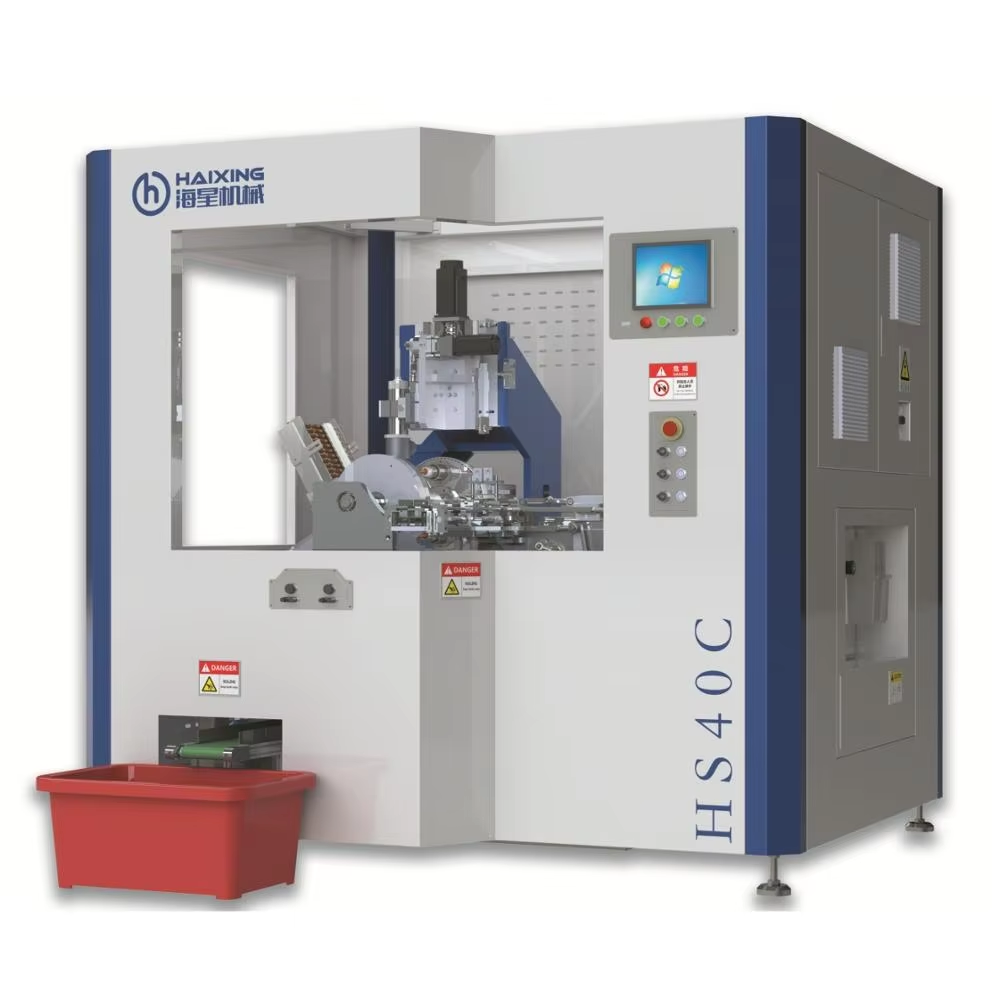
Core Mechanical Safety Standards for Brush Making Machines
The safe operation of any brush making machine begins with adherence to established mechanical safety standards. The most prominent benchmarks are the American National Standards Institute (ANSI) and American Brush Manufacturers Association (ABMA) B165 series—authoritative, consensus-based standards developed by industry experts and regularly updated to reflect advances in machinery design and risk understanding. These standards define permissible operating speeds, guarding requirements, and acceptable component tolerances. Compliance is not optional: it directly protects operators from injury and equipment from catastrophic failure.
ANSI/ABMA B165.1 Requirements for Power-Driven Brush Machinery
ANSI/ABMA B165.1 applies to manually operated or single-station power brushes—the foundational configuration for most brush making machines. It mandates that every unit display a clearly visible Maximum Safe Free Speed (MSFS) rating, which must never be exceeded under any operating condition; exceeding MSFS risks brush disintegration and high-velocity debris ejection. The standard further requires secure mounting mechanisms for rotating brush heads and automatic speed-limiting controls that prevent drive systems from surpassing the MSFS of the installed brush. Guarding around the brush zone must meet minimum distance specifications per ANSI B11.19, and for high-RPM applications, guards must be interlocked to halt motion immediately upon opening. All critical safety information—including speed limits, hazard warnings, and emergency stop instructions—must be permanently labeled on the machine itself. By embedding these requirements into design and operation, B165.1 establishes a consistent, enforceable baseline for operator protection across manual and semi-automated systems.
B165.2 Extensions for Automated Brush Assembly and Continuous-Feed Systems
B165.2 extends B165.1’s principles to automated brush making machines—those incorporating robotic handling, continuous-feed mechanisms, or synchronized multi-axis operations like trimming, tufting, and stacking. Recognizing the elevated risk profile of unattended or high-throughput processes, B165.2 mandates presence-sensing safeguarding—such as light curtains or pressure-sensitive mats—in all automated material feed zones, with verified response times that ensure stopping before operator contact. It also requires full subsystem interlocking: a fault in any axis (e.g., filament jam or trimmer stall) must trigger an immediate, coordinated shutdown of the entire line. Drive shafts in continuous-feed systems must include torque-limiting clutches to prevent mechanical overload during jams. For robotic arms handling brushes, B165.2 specifies minimum separation distances derived from validated stopping-time calculations—not generic assumptions. These provisions ensure automation enhances productivity without compromising the rigor of human-centric safety expectations defined in B165.1.
Safety-by-Design: Guarding, Risk Assessment, and Human Factors
Building safety into a brush making machine from the earliest design stages prevents hazards that are costly—or impossible—to retrofit later. A true safety-by-design approach integrates physical guarding, ISO-aligned risk assessment, and human factors engineering to protect operators while preserving efficiency, maintainability, and uptime. Each element reinforces the others, transforming compliance from a checklist into a systemic discipline.
Integrated Machine Guarding for Rotating Brush Heads and Material Feed Zones
Rotating brush heads and continuous material feed zones present entanglement, pinch-point, and projectile hazards. Fixed guards made of impact-resistant polycarbonate provide visibility while preventing direct access—critical for real-time process monitoring. Interlocked switches cut power when guards are opened, and presence-sensing systems (e.g., Type 4 light curtains compliant with IEC 61496-1) add dynamic protection at loading points where frequent operator interaction occurs. Guarding must also address secondary hazards: integrated deflectors or fully enclosed housings channel away trimmed filaments, dust, and flying debris—reducing respiratory exposure and minimizing cleanup-related interruptions. When engineered into the original machine architecture—not bolted on post-production—these safeguards retain service access for routine maintenance and cleaning without requiring guard removal or bypassing.
ISO 12100-Based Risk Assessment in Brush Making Machine Development
ISO 12100 provides the internationally recognized framework for systematic hazard identification and risk estimation throughout the design lifecycle. Its application begins with a functional description of the machine—including intended use, foreseeable misuse (e.g., attempting to clear jams while powered), and environmental conditions—and proceeds through structured analysis of each hazardous situation (e.g., brush head rotation during auto-loading). Severity and probability are evaluated using standardized matrices, guiding selection of appropriate protective measures: two-hand controls for high-risk cycles, reduced-speed modes for setup tasks, or category 3 emergency stop circuits with monitored feedback. Crucially, this assessment is iterative: every design change triggers re-evaluation of residual risk. The resulting documentation—including risk registers, mitigation rationale, and validation records—forms an auditable, traceable safety case—not just evidence of compliance, but proof of engineering intent.
Operational and Maintenance Safety Protocols for Brush Making Machines
Lockout/Tagout (LOTO) Implementation Aligned with OSHA 1910.147
Effective Lockout/Tagout (LOTO) is the cornerstone of maintenance and servicing safety for brush making machines. OSHA 1910.147 requires documented, machine-specific procedures to isolate all hazardous energy sources—including electrical motors driving tufting heads, hydraulic systems actuating filament feeders, and pneumatic actuators controlling trimming assemblies. Critical to reliability is verification: isolation must be confirmed before any physical intervention begins—using voltage testers, pressure gauges, or mechanical lock checks—not assumed. Workplace audits verify both procedural fidelity and operator competency. Facilities with rigorously audited LOTO programs report a 32% reduction in maintenance-related injuries (U.S. Bureau of Labor Statistics, 2023)—a statistic reflecting not just policy, but consistent execution grounded in training and accountability.
Electrical Safety Compliance and Ergonomic Validation for Operator Interaction
Electrical integrity and ergonomic fit are inseparable components of daily operational safety. Verification routines follow a risk-based schedule aligned with equipment criticality and exposure frequency:
| Verification Type | Testing Interval | Documentation Method |
|---|---|---|
| Ground Integrity Checks | Quarterly | Digital Maintenance Log |
| Enclosure IP Rating | Annual | Visual Inspection Record |
| Emergency Stop Response | Semi-annual | Cycle-Time Measurement |
Ergonomic validation focuses on reducing cumulative strain during high-frequency tasks—particularly manual filament threading. Height-adjustable work surfaces and angled component trays reduce shoulder abduction and wrist deviation, lowering musculoskeletal disorder risk by 24% (NIOSH, 2023) without slowing cycle time. Controller placement follows reach-envelope guidelines to eliminate overreach, supporting OSHA’s “Safe by Design” initiative for human-machine interfaces. These measures demonstrate how operational safety extends beyond hazard elimination—it actively supports human performance and long-term workforce health.
Regulatory Traceability and Quality System Integration
GMP and 21 CFR Part 820 Alignment for Safety-Critical Brush Machine Components
When brush making machines produce components for pharmaceutical, medical, or food-grade applications, regulatory traceability is non-negotiable. Both Good Manufacturing Practice (GMP) principles and FDA’s 21 CFR Part 820 require full control over safety-critical parts—from raw material batch numbers to final assembly records. This includes documented design history files, controlled document revision processes, non-conformance reporting, and corrective action tracking—all embedded within a certified Quality Management System (QMS). Leading manufacturers implement digital traceability platforms that assign unique identifiers to materials, subassemblies, and process steps—enabling rapid root-cause analysis during audits or field investigations. Such granularity doesn’t just satisfy regulators: it shortens investigation timelines, reduces scrap by catching deviations at point-of-use, and strengthens confidence in machine reliability across its entire service life.
Frequently Asked Questions
What are ANSI/ABMA B165 standards?
The ANSI/ABMA B165 standards provide safety specifications for brush-making machinery, addressing factors like permissible operating speeds, guarding requirements, and safe machine components to protect operators and equipment.
Why is Lockout/Tagout (LOTO) important for brush making machines?
Lockout/Tagout (LOTO) protocols ensure all hazardous energy sources are isolated before maintenance or servicing begins, reducing the risk of injuries and ensuring compliance with OSHA regulations.
What is ISO 12100, and how does it apply to brush making machines?
ISO 12100 defines a framework for identifying and mitigating risks throughout a machine’s design lifecycle. It helps manufacturers assess hazards and compose systematic safety measures for machines, including brush making systems.
How does ergonomic design contribute to brush making machine safety?
Ergonomic designs minimize repetitive strain injuries and improve operator interaction by ensuring features like height-adjustable work surfaces, optimized controller placements, and other human-centric enhancements.