
 EN
EN
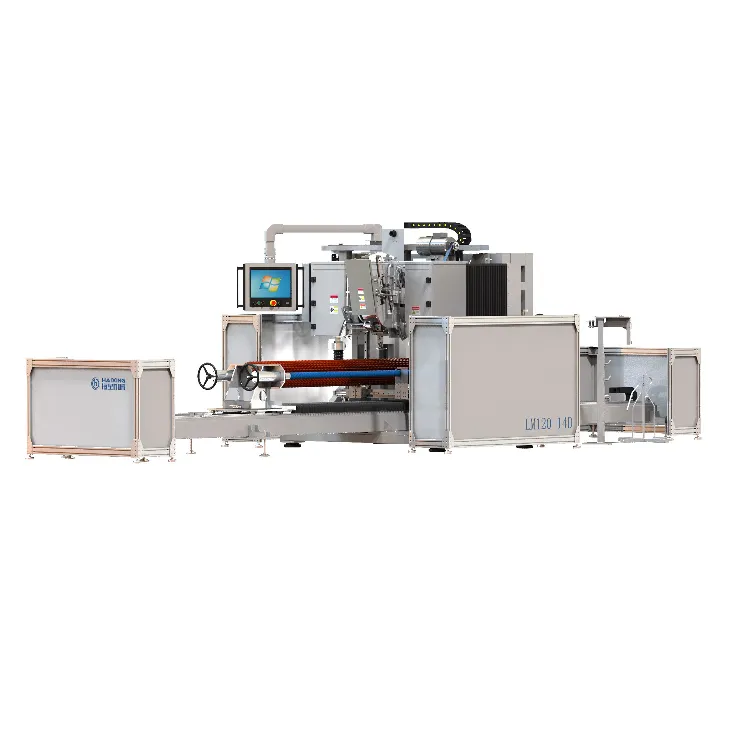
Industrial Brush Making Machine: Definition, Core Purpose, and Evolution
From Hand-Tufted Craft to High-Precision Automation
Industrial brush making machines have evolved from hand-tufted craftsmanship—where artisans used wood handles and natural fibers like boar bristle or horsehair—into high-precision automated systems. Early 19th-century innovations introduced mechanical drilling and basic tufting aids, significantly reducing reliance on manual labor. Today’s machines integrate servo-driven motion control, synthetic filament handling, and real-time quality monitoring to produce brushes with micron-level consistency. This evolution has enabled scalable, repeatable manufacturing for demanding sectors including industrial cleaning, automotive finishing, and semiconductor wafer handling—where performance and reliability are non-negotiable.
Core Functionality: Automated Bristle Insertion, Fixation, and Shape Formation
An industrial brush making machine automates three critical stages: bristle insertion, fixation, and shape formation. First, it meters and cuts filaments to precise lengths—often within ±0.1 mm—using carbide blades or laser trimming. Next, it secures tufts via pneumatic stapling (for heavy-duty applications) or UV-cured adhesives (for non-metallic or food-grade brushes). Finally, CNC-controlled trimming contours the bristle profile—beveled, dome-shaped, or tapered—to meet functional requirements. These integrated operations eliminate human variability, ensure uniform density and geometry, and support everything from narrow strip brushes to large-diameter polishing rollers.
How an Industrial Brush Making Machine Works: The End-to-End Production Workflow
Stage 1: Bristle Feeding, Metering, and Precision Cutting
Production begins with automated feeding: vibration feeders orient synthetic or natural filaments, while servo-driven metering systems dispense exact quantities per tuft. Carbide-blade or laser cutting stations then trim bristles to specification—achieving tolerances as tight as ±0.1 mm. Optical sensors verify length and alignment before advancing material to the tufting stage, ensuring dimensional integrity from the outset.
Stage 2–3: Tufting, Securing (Stapling/Adhesive), and Clamping Control
Aligned bristle bundles move to high-speed tufting heads that insert them into pre-drilled base plates at up to 1,200 tufts per minute. Dual fixation methods engage simultaneously: pneumatic staplers anchor wire-backed tufts for abrasive applications, while UV-cured adhesives bond filaments in hygienic or corrosion-sensitive contexts. Integrated vacuum clamps hold base plates with sub-millimeter stability, dynamically adjusting grip force via pressure sensors to prevent warping or misalignment.
Stage 4–5: Trimming, Finishing, and Real-Time Quality Assurance
Rotary CNC trimmers shape bristle profiles—beveled edges for sweeping efficiency, domes for cosmetic blending, or flat faces for surface contact. Electrostatic deburring removes micro-fraying, enhancing durability and finish. Throughout this stage, machine vision systems conduct 100% inline inspection against digital templates, while laser micrometers validate density and height. Feedback loops auto-correct deviations in real time, maintaining reject rates below 0.5% and eliminating downstream rework.
Industrial Brush Making Machine Types: Rotary vs. Flat Production Systems
Industrial brush making machines fall into two primary categories, each engineered for distinct brush geometries and production volumes. Understanding these systems ensures optimal alignment with manufacturing goals.
Rotary Machines: For Disk, Roller, and Cylindrical Brushes
Rotary machines specialize in continuous, high-volume production of circular brushes—such as conveyor rollers, polishing disks, and cylindrical sweepers. A rotating spindle inserts bristles into curved bases at speeds exceeding 1,200 units/hour. Their motion-based design reduces material waste by ~15% versus batch processing and maintains ±0.3 mm dimensional tolerance through synchronized servo controls. Industry benchmarks show rotary systems deliver 30–50% higher hourly output than flat alternatives, making them ideal for large-scale, standardized orders.
Flat Machines: For Strip, Block, and Surface-Cleaning Brushes
Flat machines excel at linear and rectangular forms—including cleaning strips, power-tool blocks, and scrubber pads. Using precision vertical stamping and clamping, they handle thick filaments (up to 3.5 mm diameter) and ultra-dense tufting patterns incompatible with rotary systems. Their modular tooling supports rapid changeovers between low-volume, high-mix jobs, and adjustable jigs reduce rework by 22% for complex shapes like angled surface brushes. Though slower—typically 400–600 units/hour—their accuracy (±0.1 mm alignment during curing or stapling) makes them indispensable for precision-critical applications.
Key Enabling Technologies in Modern Industrial Brush Making Machines
PLC Control, Sensor Feedback, and Integrated Equipment Ecosystems
Modern industrial brush making machines are built on three interdependent technological foundations. Programmable Logic Controllers (PLCs) orchestrate every operation—from filament feeding to final trimming—with microsecond timing and seamless recipe switching. Real-time sensor networks monitor filament tension, adhesive temperature, clamp pressure, and cutting force, enabling automatic compensation to sustain ±0.1 mm dimensional repeatability across shifts and materials. Increasingly, these machines operate as nodes within integrated equipment ecosystems: IoT connectivity enables predictive maintenance via vibration analytics and energy profiling, while cloud-linked dashboards provide remote performance oversight. Together, these technologies reduce manual intervention by 70%, support unattended 24/7 operation, and transform static machinery into adaptive manufacturing cells capable of self-optimization.
FAQ Section
What is an industrial brush making machine?
An industrial brush making machine is specialized equipment that automates the production of various types of brushes by performing tasks such as bristle feeding, tufting, trimming, and quality assurance.
What industries use industrial brush making machines?
These machines are utilized in industries including industrial cleaning, automotive finishing, semiconductor manufacturing, and general industrial applications demanding high-quality brushes.
What are the primary types of industrial brush making machines?
There are two main types: rotary machines for disk, roller, and cylindrical brushes, and flat machines for strip, block, and surface-cleaning brushes.
What technologies enable modern brush making machines?
Key technologies include PLC control, sensor feedback, IoT connectivity, and integrated equipment ecosystems, which together enhance precision, efficiency, and operational reliability.
What are the benefits of using industrial brush making machines?
These machines offer high accuracy, scalability, repeatability, and reduced reliance on manual labor, while ensuring quality and efficiency in the production process.
Table of Contents
- Industrial Brush Making Machine: Definition, Core Purpose, and Evolution
- How an Industrial Brush Making Machine Works: The End-to-End Production Workflow
- Industrial Brush Making Machine Types: Rotary vs. Flat Production Systems
- Key Enabling Technologies in Modern Industrial Brush Making Machines
- FAQ Section