
 EN
EN
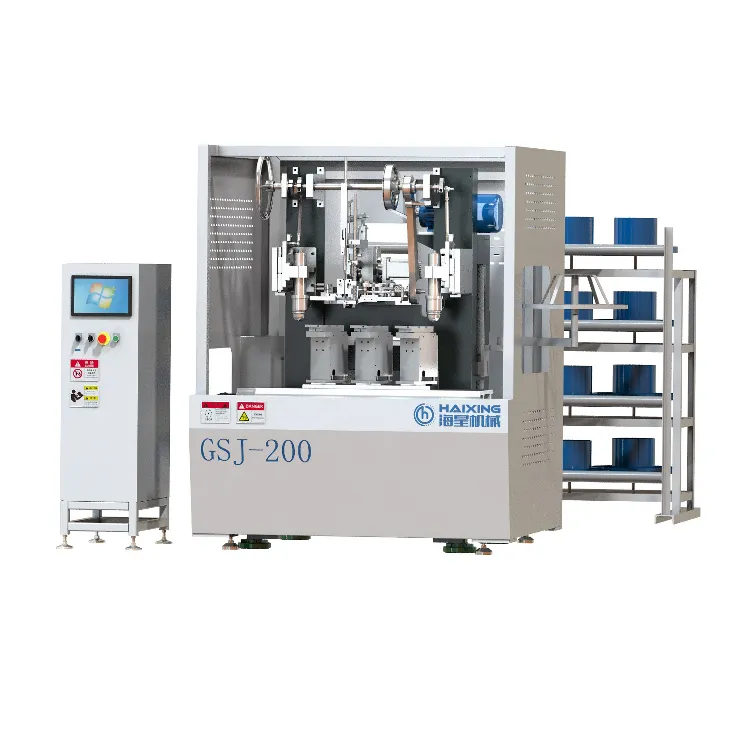
Match Production Needs to Machine Capabilities
Aligning throughput, shift patterns, and brush type diversity with rated output specs
Accurately matching production volume to an industrial brush making machine’s rated capacity prevents costly bottlenecks or underutilization. Analyze historical order patterns and peak seasons against documented output—e.g., 2,200 brushes/hour for wire-cup models. Multi-shift operations (18+ hours daily) demand robust thermal management to sustain ±3% dimensional tolerance. For facilities producing diverse brush types—from street sweepers to cosmetic applicators—verify the machine supports rapid filament and diameter changes without manual recalibration. Capacity misalignment contributes to 15% average production loss from unplanned downtime, per industry studies.
Semi-automatic vs. fully automatic industrial brush making machine: labor, consistency, and scalability trade-offs
| Factor | Semi-Automatic | Fully Automatic |
|---|---|---|
| Labor per shift | 3 operators | 1 operator |
| Changeover time | 45 minutes | 15 minutes |
| Consistency variance | ±8% | ±1.5% |
| Scalability cost | Low initial investment | 42% higher upfront |
Semi-automatic models suit smaller batches and frequent design changes—ideal for niche filaments like horsehair or abrasive nylon, where operator judgment adds value. Fully automatic systems deliver near-zero defect rates for high-volume runs, essential for ISO-certified medical or food-grade brushes. Though automation cuts long-term labor costs by 60%, true scalability hinges on integrated PLC architecture that supports future throughput upgrades without replacing core components.
Ensure Precision Compatibility With Target Brush Materials
Thermal and Torque Tolerance for PVC, Nylon, PP, Metal, and Natural Filaments
Material properties directly define machine requirements. PVC softens at 160°C, demanding tight extrusion temperature control; nylon tolerates up to 220°C but requires 30% higher torque for consistent filament insertion. Steel filaments need torque exceeding 120 N·m to avoid deformation—critical for structural integrity. Natural fibers like tampico degrade above 150°C, making thermal stability non-negotiable. Machines lacking material-specific tolerance ranges risk up to 17% filament breakage (Polymer Processing Journal, 2023), directly inflating scrap rates and compromising quality.
Filament Insertion Angle Control (±0.5°) and Its Impact on Brush Service Life and Cleaning Performance
Filament alignment precision governs functional performance. Machines maintaining ±0.5° insertion accuracy extend brush service life by 30% through even wear distribution. In semiconductor cleaning, angular deviations beyond 1° reduce particle removal efficiency by 22% due to inconsistent surface contact. Advanced servo-controlled insertion heads achieve this precision via real-time feedback loops—vital for abrasive-intensive applications and ISO 9001-compliant consistency in medical or aerospace brushes.
Evaluate Supplier Credibility and After-Sales Support Infrastructure
Verifying CE/ISO 9001 certifications, Canton Fair awards, and documented global installations
Supplier credibility starts with verifiable credentials: CE marking confirms compliance with EU safety directives; ISO 9001 certification reflects a validated quality management system. Canton Fair awards signal market-recognized innovation and reliability. Request documented global installations—not just testimonials—to assess proven deployment across varied regulatory and operational environments. Cross-verify all certifications through official registries and insist on anonymized case studies to mitigate risk of counterfeit claims.
After-sales SLA: spare parts dispatch (<72h), on-site technician response, and remote diagnostics for industrial brush making machine
A rigorous Service Level Agreement (SLA) is foundational to uptime assurance. Prioritize suppliers guaranteeing spare parts dispatch within 72 hours, defined on-site technician response windows (e.g., 48–72 hours globally), and embedded remote diagnostics for real-time troubleshooting. These commitments directly reduce mean time to repair (MTTR)—a key driver of production continuity. Equipment lifecycle analyses confirm businesses with enforceable SLAs experience significantly fewer maintenance delays. Always formalize SLA terms in writing, with clear escalation paths and provisions for scaling support as your operation grows.
Assess Total Cost of Ownership Through Tooling and Design Flexibility
Modular dies vs. fixed tooling: changeover time reduction (42% avg.) and long-term mold inventory savings
Procurement strategy must weigh lifecycle economics—not just sticker price. Modular tooling systems cut changeover time by 42% on average versus fixed dies (Manufacturing Efficiency Journal, 2023), a decisive advantage when managing diverse brush configurations. This agility reduces mold inventory overhead and eliminates recurring tooling costs for new product lines. While modular systems carry higher initial investment, their operational flexibility, lower downtime, and adaptability to evolving design requirements deliver measurable reductions in total cost of ownership over time.
FAQ Section
What factors should be considered when choosing between semi-automatic and fully automatic brush making machines?
Consider labor requirements, changeover time, consistency variance, and scalability cost. Semi-automatic machines are suited for smaller batches and frequent design changes, while fully automatic machines are ideal for high-volume runs with near-zero defect rates.
How can I ensure precision compatibility with different brush materials?
Ensure your machine meets thermal and torque tolerance requirements specific to each material type, like PVC, Nylon, Metal, etc., to avoid filament breakage and compromised quality.
What are the key credentials to verify supplier credibility?
Key credentials include CE/ISO 9001 certifications, Canton Fair awards, and global installations documentation. Cross-verify all certifications through official registries and request anonymized case studies.
Why is a Service Level Agreement (SLA) important in after-sales support?
An SLA ensures timely spare parts dispatch, on-site technician response, and embedded remote diagnostics for troubleshooting, which helps reduce mean time to repair and maintain production continuity.
Table of Contents
- Match Production Needs to Machine Capabilities
- Ensure Precision Compatibility With Target Brush Materials
- Evaluate Supplier Credibility and After-Sales Support Infrastructure
- Assess Total Cost of Ownership Through Tooling and Design Flexibility
-
FAQ Section
- What factors should be considered when choosing between semi-automatic and fully automatic brush making machines?
- How can I ensure precision compatibility with different brush materials?
- What are the key credentials to verify supplier credibility?
- Why is a Service Level Agreement (SLA) important in after-sales support?