
 EN
EN
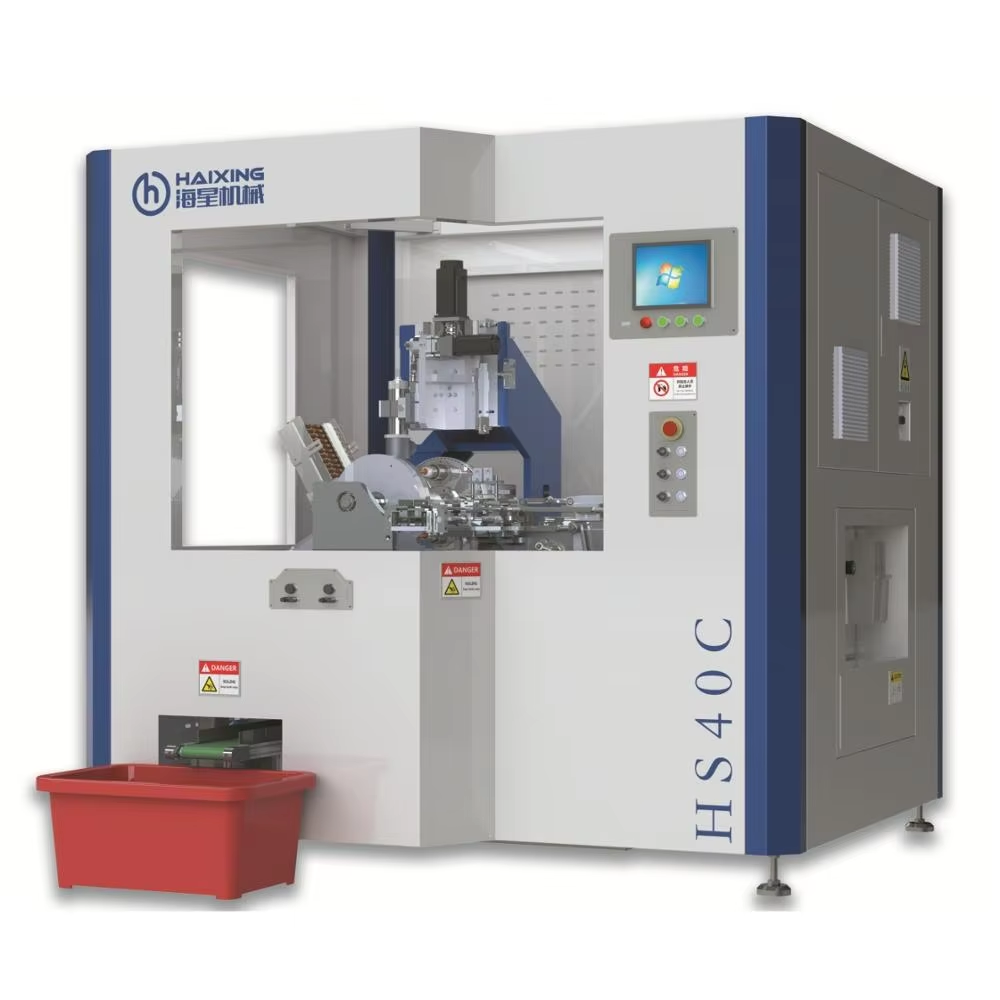
Unmatched Production Efficiency with Fully-Automatic Brush Making Machines
Quantifiable throughput gains: Cycle time reduction and output scalability
Fully-automatic brush making machines deliver transformative productivity—slashing cycle times by up to 60% versus manual methods. This leap stems from synchronized, parallel operations: hole drilling, tufting, and trimming occur simultaneously, eliminating sequential bottlenecks. A single machine reliably produces 5,000+ brushes per day, and its modular architecture supports rapid capacity scaling during demand spikes. Manufacturers consistently report tripling output within six months of deployment, sustained by fatigue-free, continuous operation. Precision control algorithms also optimize filament placement, reducing bristle waste by 15–20%.
Labor optimization and ROI acceleration for brush making machine investments
Automation consolidates multiple manual roles into a single, integrated production line—cutting staffing requirements by 70% per line while eliminating repetitive strain injuries. These improvements accelerate ROI: most facilities recover their investment in under 18 months. Key contributors include 24/7 operation with minimal supervision, elimination of retraining costs tied to turnover, and predictive maintenance that prevents an estimated $50,000+ in annual downtime losses. Energy-efficient motors use 40% less power than legacy systems—further strengthening the financial case for modern brush making machines.
Precision, Consistency, and Quality Assurance in Automated Brush Making
Micron-level tufting accuracy and repeatable flagging control via CNC brush making machines
CNC brush making machines achieve ±5-micron drilling accuracy and micron-level tufting precision through programmable servo motors and laser-guided positioning—ensuring consistent bristle density, orientation, and anchoring across every unit. Flagging operations maintain sub-millimeter trimming tolerances, validated across 10,000+ cycles. One leading facility achieved 99.8% dimensional compliance after automation—meeting stringent pharmaceutical and electronics industry standards that require microscopic repeatability.
Defect rate reduction: Evidence from high-volume brush manufacturing facilities
Automated systems suppress defects by standardizing parameters beyond human capability. Integrated sensor arrays detect material inconsistencies in real time, while machine vision identifies and rejects misaligned tufts before curing. High-volume manufacturers report 60–70% fewer rejected units post-automation—a $740,000 annual savings for mid-sized facilities (Ponemon Institute, 2023). Closed-loop feedback adjusts tension dynamically when filament diameter deviates beyond ±0.03mm, enabling consistent Six Sigma quality at scale.
Scalable Customization Without Compromise: Modular Brush Making Machine Systems
Modular brush making machine systems deliver unmatched customization agility without sacrificing efficiency. Unlike fixed-purpose equipment, these platforms support rapid reconfiguration—swapping tufting heads, filament feeders, or trimming units in minutes to shift between product types. A single system can produce delicate cosmetic brushes one hour and heavy-duty industrial scrubbers the next, eliminating the need for dedicated lines per application.
This modularity also future-proofs operations. As volumes grow or new materials emerge, manufacturers add capabilities incrementally—such as high-speed polishing modules or AI-powered quality inspection—without full-line overhauls. Phased investments reduce capital risk by 40–60% compared to traditional machinery replacements, all while maintaining 98.5% operational continuity during upgrades. The result is truly dynamic on-demand manufacturing: small custom orders and large standardized runs coexist profitably on the same floor.
Smart Factory Integration: Industry 4.0 Capabilities in Modern Brush Making Machines
Real-time performance analytics, predictive maintenance, and OEE tracking
Modern brush making machines serve as intelligent nodes within Industry 4.0 ecosystems. Embedded IoT sensors capture real-time data on cycle times, energy use, and material flow—enabling granular performance analytics that identify bottlenecks instantly and cut unplanned downtime by up to 45%. Predictive maintenance algorithms analyze motor temperature and vibration patterns to schedule interventions proactively, reducing maintenance costs by 30% in high-volume settings. Integrated Overall Equipment Effectiveness (OEE) dashboards quantify utilization, yield, and throughput—revealing actionable improvement opportunities. Facilities using connected brush making machines report 18% higher production efficiency than those relying on standalone equipment.
FAQ
What are the main benefits of fully-automatic brush making machines?
Fully-automatic brush making machines significantly enhance productivity by reducing cycle times by up to 60% compared to manual methods, allowing for the production of over 5,000 brushes per day. They also reduce staffing requirements by 70% and offer rapid capacity scaling during demand spikes.
How do automated brush making machines ensure quality?
These machines achieve high precision with ±5-micron drilling accuracy and integrate sensor arrays for real-time defect detection. They employ machine vision to ensure correct bristle placement, resulting in lower defect rates and high compliance with industry standards.
What customization options do modular brush making machine systems offer?
Modular systems allow for easy swapping of tufting heads, filament feeders, or trimming units, making it possible to quickly switch between different brush types. This flexibility supports both small custom orders and large standardized runs without the need for dedicated lines for each application.
How is Industry 4.0 integrated into modern brush making machines?
Modern brush making machines come with IoT sensors for real-time data collection and analysis, enabling predictive maintenance and overall equipment effectiveness tracking. This connection within Industry 4.0 ecosystems results in improved production efficiency and proactive problem resolution.
Table of Contents
- Unmatched Production Efficiency with Fully-Automatic Brush Making Machines
- Precision, Consistency, and Quality Assurance in Automated Brush Making
- Scalable Customization Without Compromise: Modular Brush Making Machine Systems
- Smart Factory Integration: Industry 4.0 Capabilities in Modern Brush Making Machines
- FAQ