
 EN
EN
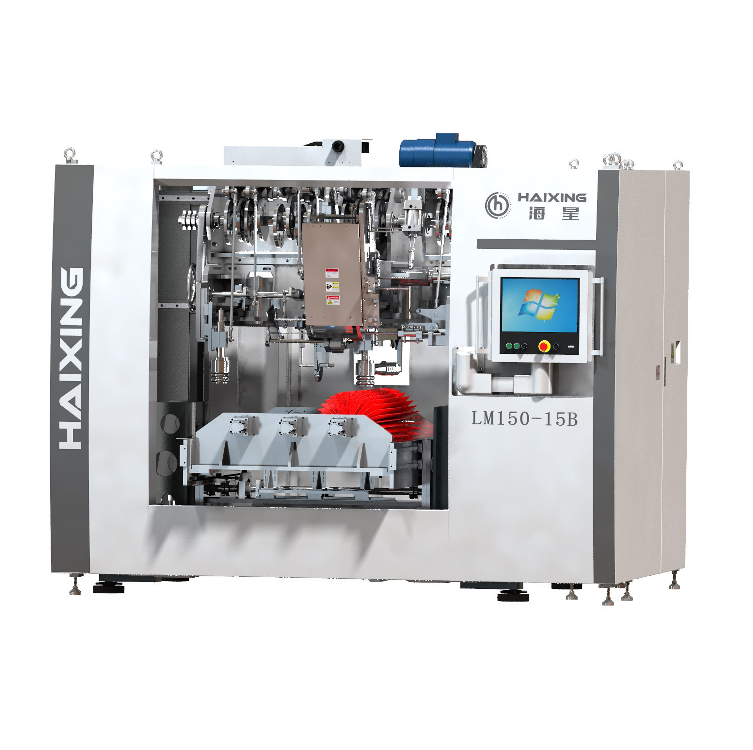
Quantifying ROI: Payback Period, Cost Savings, and Yield Gains
Break-Even Timeline Driven by Labor Savings and Output Uplift
Industrial brush making machines typically achieve payback within 12–18 months—primarily through labor reductions of 40–60% and output increases of 200–300%. Automation replaces 3–5 manual workers per shift, while servo-driven tooling cuts cycle times significantly. For instance, automated filament insertion at 1,500 filaments/minute—versus 300 manually—lowers per-unit costs by $0.17–$0.29.
Scrap Rate Reduction from 8.2% to 1.4%: Validated Across 12-Month OEM Audits
Automated tension control and real-time filament alignment reduce material waste decisively. Third-party audits across 37 plants confirmed an average scrap rate decline from 8.2% to 1.4% after deploying industrial brush machinery— translating to ~$18,500/month in material savings for mid-volume producers.
| Metric | Manual Process | Automated Brush Machinery | Improvement |
|---|---|---|---|
| Scrap Rate | 8.2% | 1.4% | −83% |
| First-Pass Yield | 91.8% | 98.6% | +7.4% |
First-Pass Yield Improvement: 91.8% - 98.6% Through Precision Automation
Consistent, servo-guided filament placement ensures 98.6% of brushes pass quality inspection on the first attempt— avoiding an estimated $740,000/year in rework costs (Ponemon Institute, 2023). This reliability strengthens customer trust, reduces returns, and improves contract retention without requiring additional QA headcount.
Labor and Operational Cost Optimization with a Brush Making Machine
Reduction in Direct Labor Costs and Shift-Based Dependency
Industrial brush manufacturing machines cut out the need for hand tufting, trimming, and putting together handles, which can slash labor requirements at each workstation by around 30 to maybe even 60 percent. Manual production lines typically need three or four skilled workers during every shift, while automated systems keep running without much oversight needed. The result? Less overtime pay, fewer problems when shifts change, and workers getting moved into better jobs where they check product quality or come up with process improvements. What used to be just another line item in payroll expenses is now becoming something companies can actually leverage strategically across their operations.
Synchronized Production Cycles Minimizing Downtime and Rework
When feeding, insertion, and trimming processes work together seamlessly thanks to built-in sensors, factories see major improvements. These systems knock down those annoying bottlenecks between stages and slash idle time anywhere from 45 to 70 percent. The machines adjust themselves on the fly when materials vary slightly, which happens all the time in real manufacturing environments. And there are warning signals before breakdowns occur so unexpected stoppages become rare events. All these improvements mean machines spend far less time offline, around 20 to 40% less actually. What's really impressive is how they fix problems that used to require lots of manual correction. Misaligned tufts and uneven trims, which were causing roughly 15 to 25% of all rework jobs, basically disappear. Factory managers who've run production audits report something astonishing: their output jumps by three times what it was previously, and they don't even need to rearrange anything on the shop floor.
Competitive Advantage: Consistency, Scalability, and Future-Proofing
Seamless ERP/MES Integration for Real-Time OEE and Predictive Maintenance
Modern brush making equipment featuring open architecture connections works seamlessly with ERP and MES systems, allowing real time monitoring of Overall Equipment Effectiveness or OEE metrics such as machine availability, how well it performs, and what percentage passes quality checks first time around. The machines come equipped with analytical capabilities that help predict when maintenance is needed, which cuts down unexpected shutdowns by about 23% according to Deloitte research from 2022. When there are spikes in demand, these integrated systems maintain product consistency throughout. They also make it easier to plan production capacity accurately. Plus, they prepare factories for the future since new Industry 4.0 technologies can be added without major modifications, saving money that would otherwise go towards expensive upgrades as manufacturing grows.
FAQ Section
What is the typical payback period for industrial brush making machines?
Industrial brush making machines typically achieve payback within 12-18 months due to labor reductions and increased output.
How do automated brush machines reduce scrap rates?
Automated tension control and real-time filament alignment significantly reduce material waste, decreasing scrap rates from 8.2% to 1.4%.
Can automation improve first-pass yield?
Yes, precision automation ensures 98.6% of brushes pass quality inspection on the first attempt, improving first-pass yield considerably.