
 EN
EN
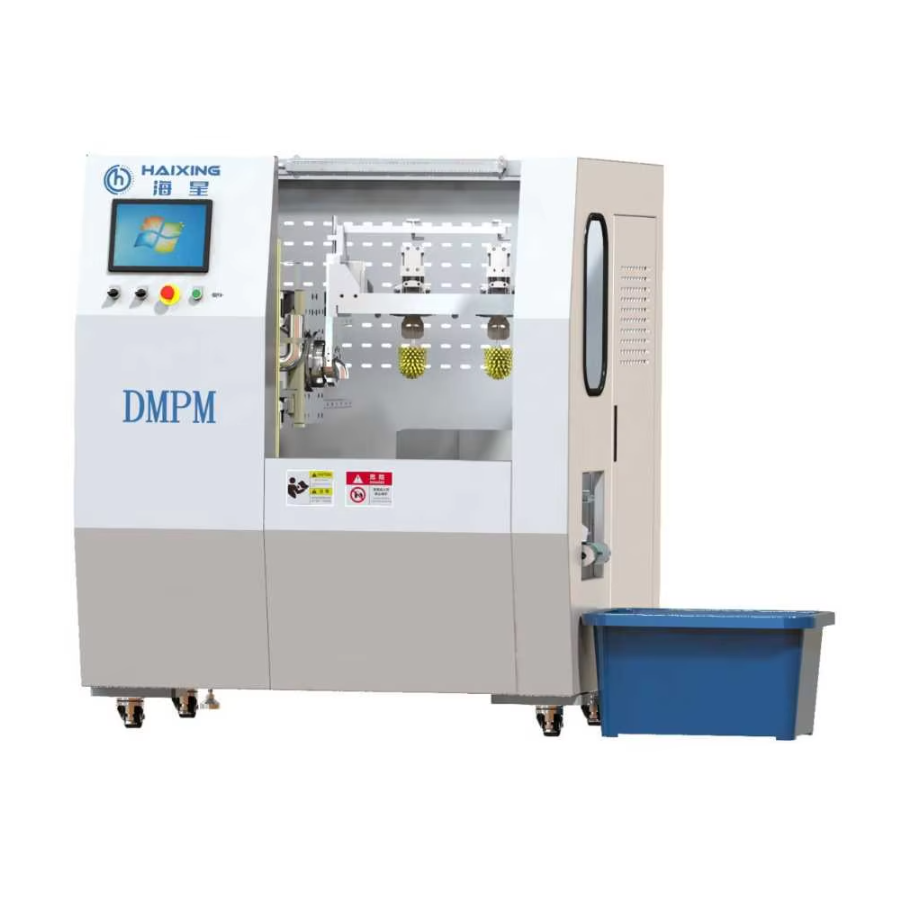
Precision and Consistency: Achieving Sub-0.02mm Tolerances in Every Brush
CNC brush making machines today offer amazing precision thanks to their computer controlled systems which basically cut out human mistakes entirely. These machines can repeat positions down to just 0.002mm, something pretty hard to achieve by hand. When we talk about placing individual filaments, this kind of microscopic accuracy makes all the difference. For brushes used in medical cleaning equipment especially, getting those bristles right matters a lot because how they're shaped affects both how well the tool works and whether it's safe for patients. Manual manufacturing just can't match what CNC programming does here. The machines keep pressure and alignment consistent throughout massive production runs, so there won't be those annoying gaps between bristles or clusters where filaments bunch together instead of spreading out evenly. And let's face it, nobody wants brushes that deform during use when they need to maintain their shape for proper function.
How CNC Control Ensures Repeatable Filament Placement and Geometry
Modern CNC machines turn digital blueprints into real world products thanks to super accurate servo motors that can rotate with 0.0001 degree precision. These systems have built-in feedback loops that keep track of how deep filaments go during manufacturing and make automatic adjustments when materials aren't perfectly consistent. The result? Production runs maintain tolerances under 0.02mm throughout. To put that in perspective, it's actually smaller than 1/5th of what a single strand of human hair measures. This kind of fine control matters a lot for things like lab sample cleaners where even tiny particles can cause problems. With such precise manufacturing, the bristles end up smooth and uniform, which means fewer loose particles floating around and less chance of samples getting mixed up accidentally.
Real-World Validation: 99.8% Dimensional Compliance in Automotive Sealing Brushes
For automotive transmission systems, the sealing brushes need to maintain diameters within a tight tolerance of plus or minus 0.015mm to stop fluid leaks when exposed to extreme pressures and temperatures. Looking at production data, CNC manufactured brushes hit around 99.8 percent dimensional accuracy compared to only about 82 percent for those made manually. This kind of consistent quality makes a big difference too, cutting down warranty issues by nearly 37 percent in engines that run hot, since even small size variations can lead to serious sealing problems. What makes CNC machines so reliable is their capability to produce exactly the same brush shape over long periods without the usual issues that plague manual operations like gradual drift, operator fatigue, or equipment going out of alignment during extended shifts.
Speed and Flexibility: Rapid Changeover for Custom Brush Configurations
Modular Fixturing and Digital Tool Presets Cut Setup Time by 65%
With modular fixturing systems, manufacturers can quickly adjust their brush holding components without going through those tedious realignment processes that used to eat up so much time. These digital tool presets basically remember all the important details for every brush design they've worked on before. We're talking about things like exact cutting paths, how far apart the filaments need to be spaced, and even the logic behind different patterns. Just one command brings everything back exactly where it needs to be. A recent study from the 2023 Automation Efficiency Benchmarks shows these systems actually cut down changeover times by around 65 percent. What used to take two full days with old manual tools? Now plants can crank out 12 completely different brush types during just one regular work shift. The CNC brush making machines handle filament sizes anywhere between 0.1mm right up to 3mm thick. They also tackle complicated shapes such as helical designs, tapered ends, or those tricky multi-zone profiles without needing any kind of mechanical adjustment at all. This means production teams can switch between rush orders for cosmetic brushes and high precision medical prototypes without stopping their workflow. Development cycles get shortened by roughly 40%, which makes everyone in the plant a lot happier when deadlines come rolling around.
The ROI Gap: Why 73% Still Rely on Manual Tooling Despite 4.2x CNC Fixturing Returns
The numbers don't lie when it comes to CNC automation versus manual tooling. Some studies have shown returns are actually 4 times better with CNC machines. Still, most brush makers haven't made the switch yet. According to recent industry polls, around 7 out of 10 companies continue using old school methods. Why? Well, there are several reasons holding them back. First off, getting into CNC usually costs around 120 grand upfront which is no small amount for many businesses. Then there's all the training required for workers who've been doing things the same way for years. And let's face it, some folks just aren't ready to change how they've always done things. But wait, newer research from the 2024 Manufacturing ROI Studies paints a different picture. These findings suggest that even with those initial costs, CNC systems typically pay for themselves within about fourteen months because...
- 60% lower scrap rates
- 55% reduction in labor cost per unit
- 80% faster custom order fulfillment
Manual methods consistently struggle beyond ±0.1mm tolerances, causing sealing brush failures in automotive QA checks 22% more frequently. Forward-thinking facilities close the adoption gap through phased implementation—starting with high-margin specialty brushes—to demonstrate measurable quality and efficiency gains before scaling across the production floor.
End-to-End Automation: Integrated Trimming, Deburring, and Surface Finishing
In-Machine Filament End Conditioning Eliminates Secondary Deburring Stations
Today's CNC brush making equipment now incorporates filament end conditioning right into the main assembly process. These machines can trim, remove burrs, and polish filament ends all at once without stopping production. No more separate deburring stations needed something that used to cost around 30% of what traditional brush factories spent overall and caused major delays in handling. When manufacturers finish surfaces during production rather than afterward, they cut down on labor needs by about 40%, plus there's less risk of damaging sensitive materials like fine nylon strands or natural horsehair bristles. The system has this closed loop control feature that keeps each filament tip looking exactly the same throughout the batch. This matters a lot for medical tools and makeup brushes where consistency in contact area makes all the difference in how products apply. What we get in the end is basically one continuous operation workflow maintaining tolerances below 0.02mm while cutting down how long it takes to complete each cycle.
Regulatory-Ready Scalability: From Medical to Aerospace Applications
Full Process Traceability and ISO 13485 Compliance via CNC Brush Making Machine Logs
Medical device manufacturers and aerospace companies need tons of paperwork to satisfy regulations such as ISO 13485 and AS9100 requirements. CNC brush making equipment takes care of this headache by automatically creating digital records in real time. These logs track all important parameters like how tight the filaments are held, the force used during insertion, angles for trimming, how long each part sits before moving on, plus temperature profiles throughout production. Everything gets stamped with timestamps and who operated the machine too. Having detailed records makes it much easier during inspections and gives solid proof that quality standards were actually followed. Manual documentation just doesn't cut it anymore since people tend to miss things, make mistakes copying numbers down, or lose track of different document versions. CNC systems typically hit around 99.7% accuracy rate between batches which matters a lot for consistency. What's really nice about these machines is their ability to scale up production without needing complete overhauls. The same basic platform works whether making FDA approved surgical brushes or aircraft seal components that meet AS9100 specs. Standardized processes ensure quality stays consistent no matter how many units get produced. This means companies save money and time because there's no waiting period for requalification when moving from small test runs to mass manufacturing.
FAQs
What are the benefits of using CNC machines for brush making?
CNC machines offer precision, consistency, and reduced labor costs in brush making. They maintain tolerances under 0.02mm, leading to fewer defects and improved product quality.
Why do some companies still rely on manual tooling?
Despite the higher returns of CNC machines, many companies stick to manual methods due to high initial costs and the need for training.
How does CNC brush making improve regulatory compliance?
CNC machines automatically generate digital logs that track production parameters, ensuring compliance with standards like ISO 13485 and AS9100.