
 EN
EN
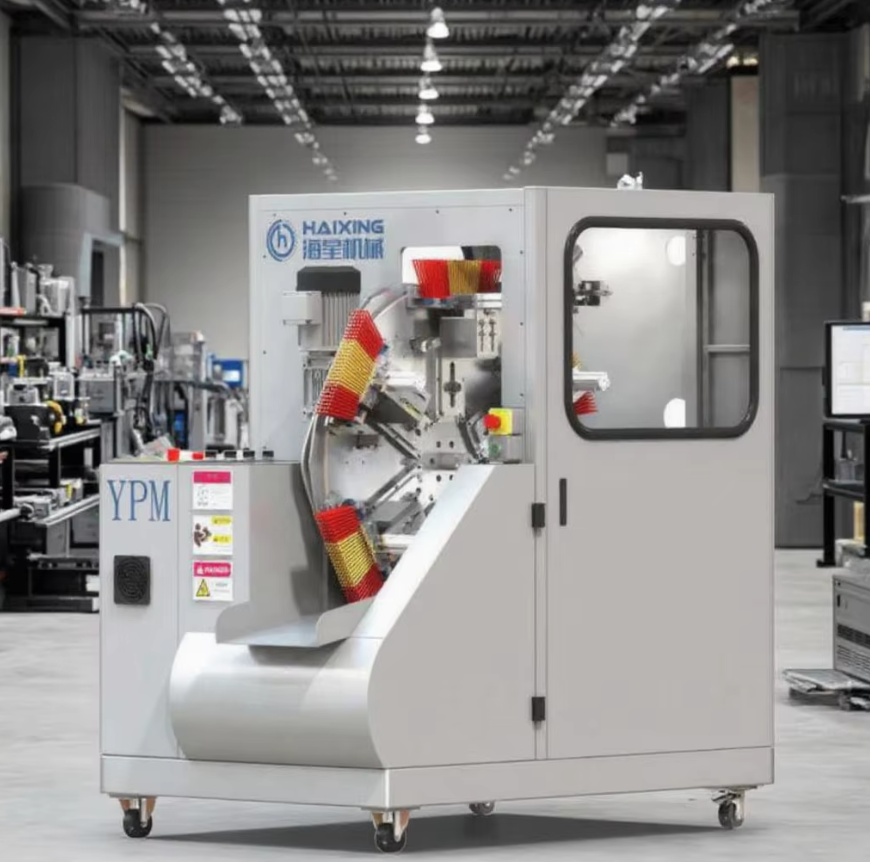
Define Your Production Requirements Before Evaluating Brush Making Machines
Matching throughput, brush types, and shift patterns to machine capacity
Before picking out any equipment, it's really important to get clear numbers on what gets produced each day and exactly what kind of brushes are being made. Take for example, a plant making around 5,000 industrial brooms during each shift definitely needs totally different machines compared to another facility that only makes about 500 specialty medical brushes. Look at what products go into the mix too. Wire drawn brushes generally call for stronger torque capabilities, whereas those delicate cosmetic brushes require extremely precise placement of their tiny filaments. How long machines run matters a lot when it comes to wear and tear. Equipment running nonstop all week needs much tougher construction with parts that can handle heat better. Getting these factors wrong can lead to serious problems down the line. Some industry reports suggest plants might end up using just 60% of their capacity if they overlook these basics.
Assessing real-world durability and precision under sustained factory loads
The numbers we see in lab settings often don't match what happens on the factory floor. When looking at machinery options, it's worth focusing on those that have gone through proper stress testing for over 1,000 hours under conditions similar to our own operations. What really matters? How well they handle vibrations during fast tufting processes, maintain stable temperatures while working with tough stuff like metal threads, and keep their alignment within half a degree even after running nonstop for eight hours straight. Factories that make these kinds of checks part of their selection process tend to experience around 30 percent less unexpected downtime compared to those relying solely on standard industry benchmarks. The difference between good enough and truly reliable equipment becomes clear once it's put through its paces in real world situations.
Compare Brush Making Machine Types by Axis Capability and Application Fit
2-axis tufting vs. 4-axis radial vs. 5-axis curved-surface systems: functional trade-offs
How many axes a brush making machine has makes all the difference when it comes to what kinds of brushes can be produced. Two axis machines are great for making lots of flat brushes quickly since they handle angle variations around 15 degrees pretty well. They're also easier to operate and cheaper to run, but just don't work so good on anything curved or shaped. When we get to four axis radial units, these machines spin around to tackle things like bottle cleaners where the filaments need to angle about 45 degrees from straight. The downside? Maintenance goes way up compared to two axis models, probably somewhere between a quarter to third more work overall. Then there are those fancy five axis systems that really shine on complicated shapes such as medical tools or handles designed for comfortable grip. These babies can insert bristles at any angle up to 90 degrees, which is amazing, but comes at a price. Programming them takes someone who knows what they're doing, so finding skilled operators becomes a real challenge for manufacturers considering this option.
- Speed vs. Complexity: 2-axis machines produce 40% more brushes/hour than 5-axis equivalents
- Material Range: 4-axis systems handle PVC and metal bases better than 2-axis, but 5-axis accommodates irregular substrates like curved wood
- Changeover Time: Reconfiguring 5-axis units takes 2–3 longer than 2-axis models
Stick with 2-axis for standardized brooms, upgrade to 4-axis for automotive brushes, and reserve 5-axis for custom high-tolerance applications.
When advanced axis control justifies higher CAPEX: lessons from high-mix brush manufacturers
High-mix facilities producing 100+ brush types often recoup multi-axis investments within 18–24 months through reduced secondary operations. One aerospace brush manufacturer cut rework rates by 32% after switching from 2-axis to 5-axis machines, despite a 60% higher initial investment. The tipping point comes when:
- Customization exceeds 30% of production
- Manual finishing consumes 15% of labor hours
- Filament angles vary beyond ±30° regularly
Four-axis systems prove optimal for medium-complexity runs (e.g., angled street sweeper brushes), while 5-axis units become essential for organic shapes requiring subsurface toolpath control. Avoid over-specification—base decisions on actual geometric requirements rather than hypothetical scenarios.
Evaluate Automation Level and Material Compatibility of Your Brush Making Machine
Semi-automatic vs. fully automatic: balancing labor cost savings with material flexibility (nylon, PP, wood, PVC, metal)
The choice of automation level makes all the difference when it comes to how well operations run and what kinds of materials can be processed. Semi automatic setups still need someone to load and unload items manually, but they work better with tricky materials such as wooden handles or metal filaments. These are great options for small runs where customization matters most. According to a recent report published by ISME in their 2023 Industrial Automation Benchmark Study, fully automatic systems can cut down on labor expenses by around 40%. However, these machines sometimes struggle with stiff materials like PVC or polypropylene. When dealing with products that combine different materials say nylon bristles attached to solid wood bases look for equipment featuring adjustable clamp settings and controlled heat during filament insertion. This helps keep production moving smoothly while ensuring everything works together properly.
| Automation Type | Labor Efficiency | Material Flexibility | Best For |
|---|---|---|---|
| Semi-Automatic | Moderate | High (wood, metal, PVC) | Custom/low-volume batches |
| Fully Automatic | High (40% savings) | Moderate (nylon, PP) | High-volume standardized production |
Advanced brush making machines now incorporate hybrid material handling systems, enabling seamless transitions between synthetic and natural substrates without recalibration. Verify thermal tolerance ranges—especially for thermoplastic filaments—and feed mechanism specifications to prevent jamming during sustained operation.
Prioritize Technical Specifications That Directly Impact Brush Quality and Versatility
Filament insertion angle control (±15° to ±90°) and its effect on performance for brooms, industrial brushes, and curved-surface applications
The accuracy of how filaments are inserted into brushes plays a huge role in how well they actually work in different situations. Industrial scrubbing brushes typically need around plus or minus 30 degrees for the best fiber packing during tough cleaning jobs, whereas brooms perform better with tighter angles of about 15 degrees either way since this helps them grab dirt more effectively. When dealing with curved surfaces like those found in turbine cleaning equipment, the angle needs to be much more flexible ranging from roughly 60 to 90 degrees so the brush stays in proper contact despite all the curves and contours. Factory reports suggest that keeping these angles within just five degrees either side can extend tool life by about 40%, which matters a lot in abrasive environments where even small misalignments cause premature wear. Material choice matters too here. Polypropylene fibers generally handle bigger variations in insertion angle compared to nylon which is more sensitive. This difference affects what kinds of products manufacturers can produce efficiently.
Frequently Asked Questions
What factors should be considered when choosing a brush making machine?
Consider factors such as throughput requirements, brush types, machine capacity, automation level, material compatibility, and filament angle control to ensure optimal performance and efficiency.
How do axis capabilities affect brush making machines?
Axis capabilities determine the complexity of shapes the machines can handle. Two-axis machines are suited for flat brushes, four-axis for radial brushes, and five-axis for curved surfaces.
What is the difference between semi-automatic and fully automatic brush making machines?
Semi-automatic machines require manual loading and unloading and offer higher material flexibility, while fully automatic machines reduce labor costs but may struggle with stiff materials.
How does filament angle affect brush performance?
Filament angle impacts fiber packing efficiency and tool life. Different applications require specific angles, affecting the overall performance and durability of the brush.
Table of Contents
- Define Your Production Requirements Before Evaluating Brush Making Machines
- Compare Brush Making Machine Types by Axis Capability and Application Fit
- Evaluate Automation Level and Material Compatibility of Your Brush Making Machine
- Prioritize Technical Specifications That Directly Impact Brush Quality and Versatility
- Frequently Asked Questions